Surfaces Opening and Closing
How much open ground does a cluster of marks need?
These seventeen works move between surfaces covered in small marks, broad rounded arrangements and formations surrounded by light ground. Compare the edge of a cluster with its interior. A pale surround may separate the marks clearly, while a densely occupied field makes that separation harder to maintain.
Across the whole surface
Color and texture occupy almost every area. Follow a band, then compare the uneven gaps left by dark patches and pale tangled marks across neighboring colored fields.
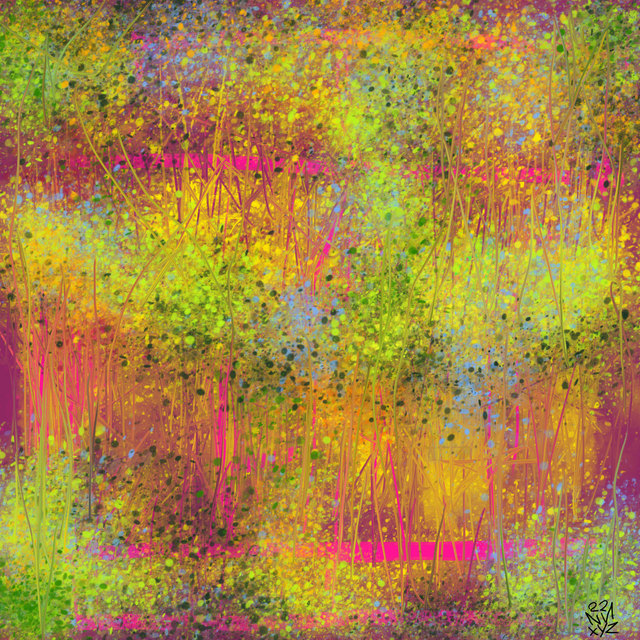
Abstract #02
nnxyz
View artworkSmall colored marks cover nearly the whole surface, gathering into loose horizontal zones. Yellow and green areas remain connected through scattered pink and darker flecks. The eye can follow a band across the image, then lose it among the smaller interruptions.
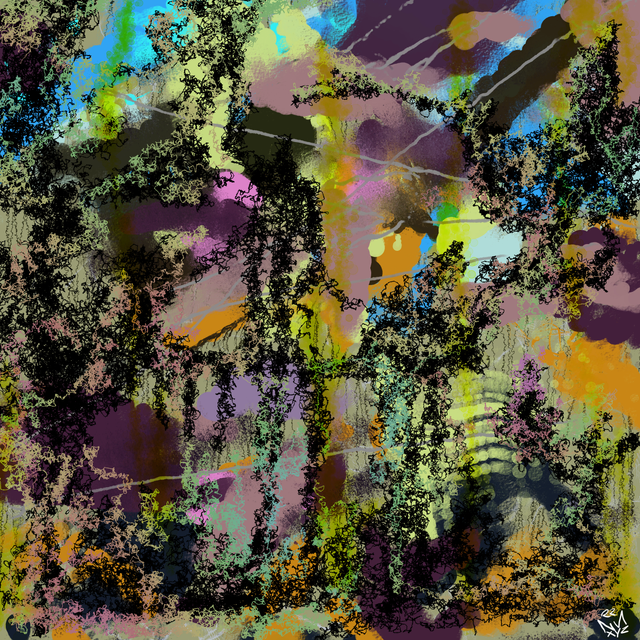
Abstract #07
nnxyz
View artworkBroken black textures spread over muted purple, yellow and turquoise areas. Pale thin lines cross the darker patches without following their edges. The dark marks divide the surface unevenly, leaving openings through which the underlying color remains visible.
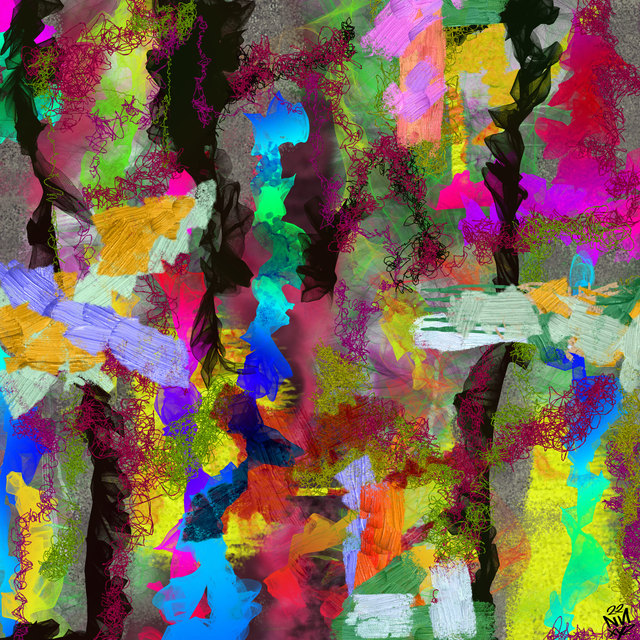
Abstract #06
nnxyz
View artworkIrregular dark vertical zones separate thick-looking patches of green, pink, blue and yellow. Fine tangled lines lie across several patches. These two scales of marking make the surface readable both as broad colored divisions and as a much smaller network of crossings.
The small colored marks gather into larger dark textures separated by openings of purple and yellow.
Broken black textures become more definite vertical zones among brighter, thicker-looking patches.
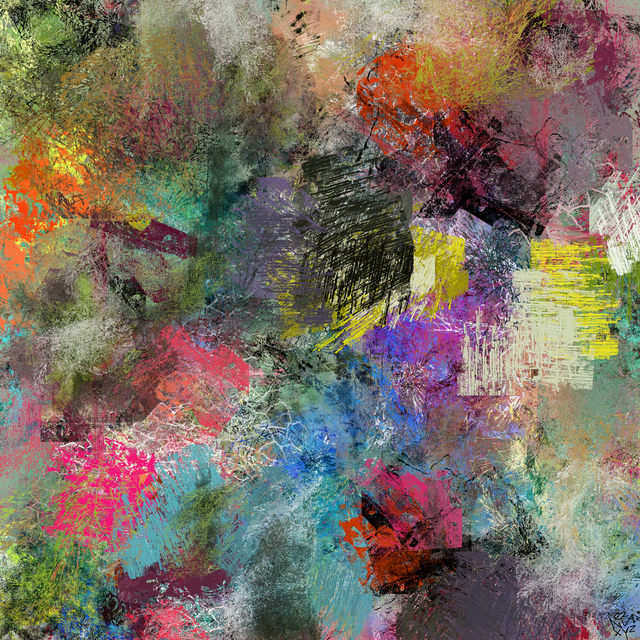
Abstract #27
nnxyz
View artworkRough-edged patches of pink, green, orange and blue meet across a textured surface. Pale tangled marks cover parts of their boundaries. Rather than offering one clear direction, the image invites looking at how each patch passes into the next.
The vertical divisions loosen into rough-edged patches that pass into one another.
Rounded boundaries
Rounded forms establish larger boundaries within a busy surface. Compare separate dark shapes with curved bands, broken arcs and an arched formation whose marks descend below it.
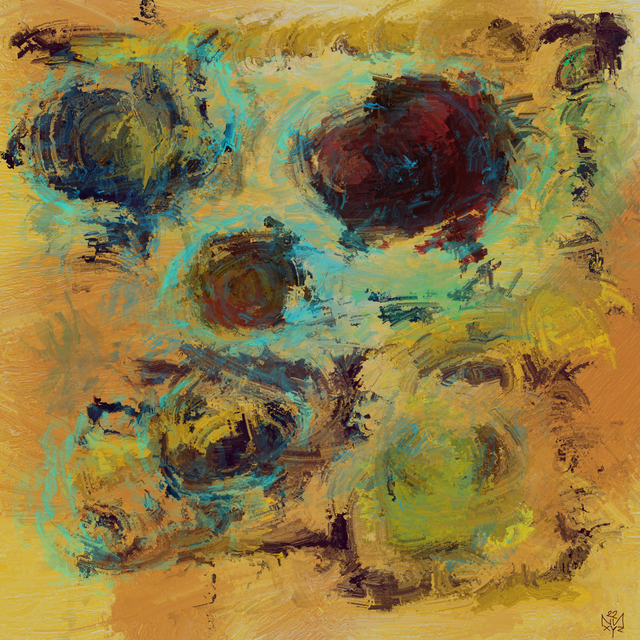
Abstract #44
nnxyz
View artworkSeveral dark rounded forms sit within a yellow-green field. Smaller circular and irregular marks surround them. Their broad boundaries make them distinct from the rough surface, though the edges blur where neighboring colors meet.
The scattered patches gather into several dark rounded forms within a yellow-green surround.
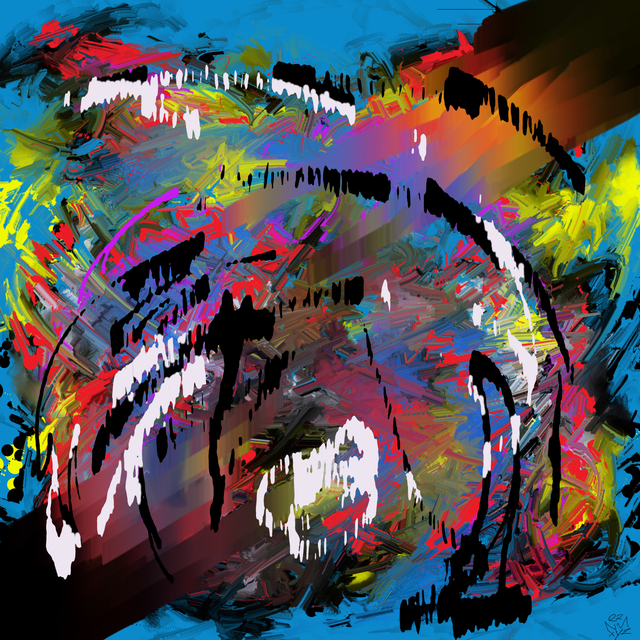
Abstract #37
nnxyz
View artworkBroad curved bands turn around a bright lower-center opening. Black and white broken edges interrupt blue, red, yellow and purple areas. The repeated arcs suggest rotation, while the ragged marks keep the turns from forming a smooth spiral.
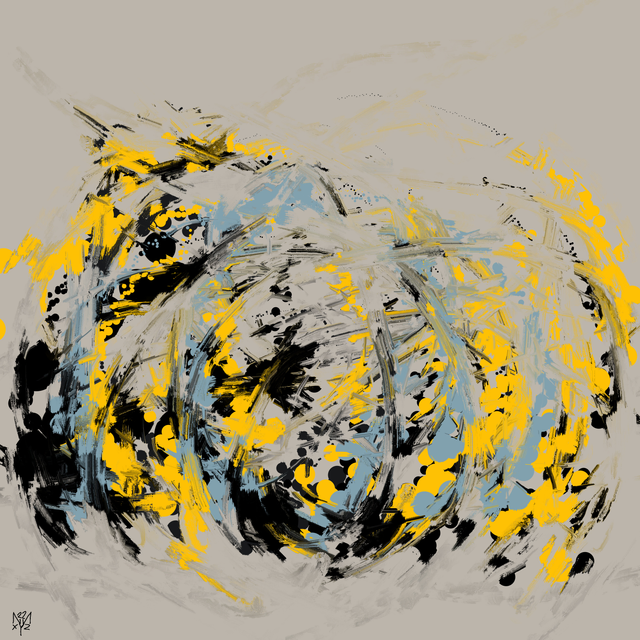
Abstract #46
nnxyz
View artworkBroken black and yellow arcs surround a loosely defined pale center. Shorter gray and blue marks sit between the arcs. Their repeated curvature creates a circular arrangement while leaving gaps through which the surrounding neutral ground enters.
Separate rounded forms give way to larger turning bands around one lower-center opening.
The densely colored turning bands open into broken black and yellow arcs on neutral ground.
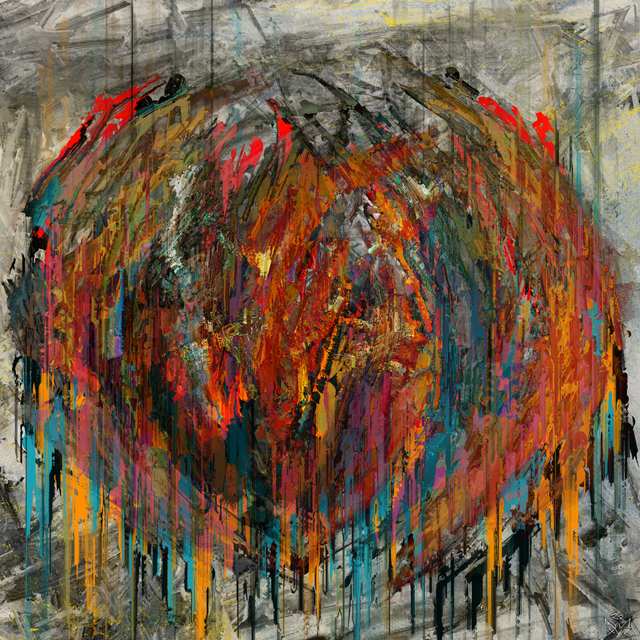
Abstract #pos
nnxyz
View artworkAn arched concentration of red, orange and darker marks occupies a gray field. Long black and turquoise lines descend from its lower edge. The rounded upper boundary and the hanging lines provide two different directions within the same formation.
The broken circle becomes an arched upper boundary with long lines hanging below it.
Ground left visible
Light or muted surrounds make smaller marks easier to isolate. Compare scattered interruptions, a single fine route, an enclosing contour and a central formation with an uneven edge.
Abstract #35
nnxyz
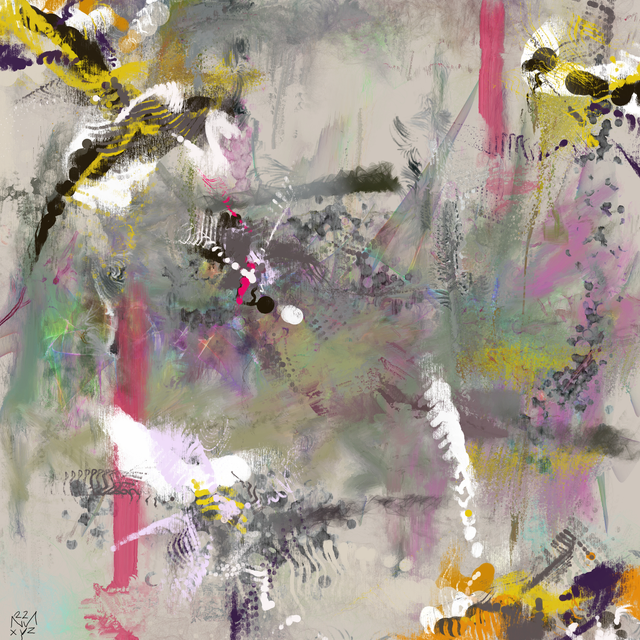
View artworkA pale gray surface carries scattered black, yellow and pink interruptions. Curved chains of small light marks pass through the lower half. The open ground lets these broken routes remain visible without enclosing them in a strong outer shape.
The crowded arch opens into a pale field with scattered marks and curved light chains.
Abstract #48
nnxyz
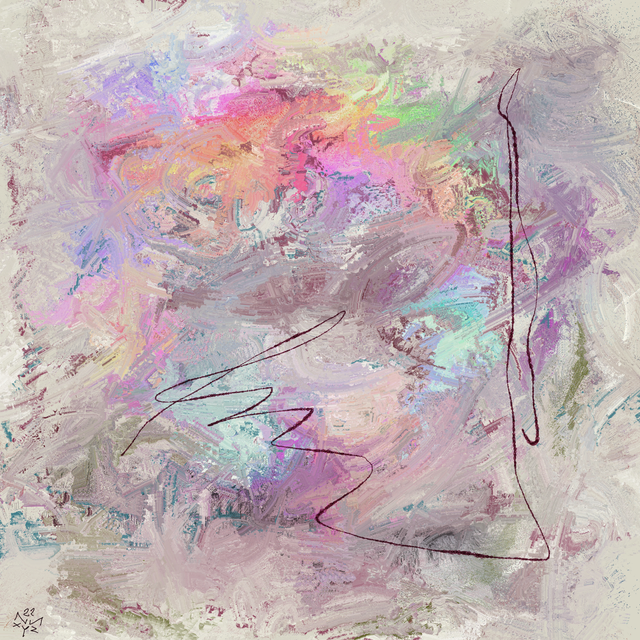
View artworkPale pink, turquoise and mauve marks spread across a light gray field. A thin dark looping line passes through the lower middle and up the right side. That line supplies a distinct route through an otherwise softly divided surface.
Abstract #38
nnxyz
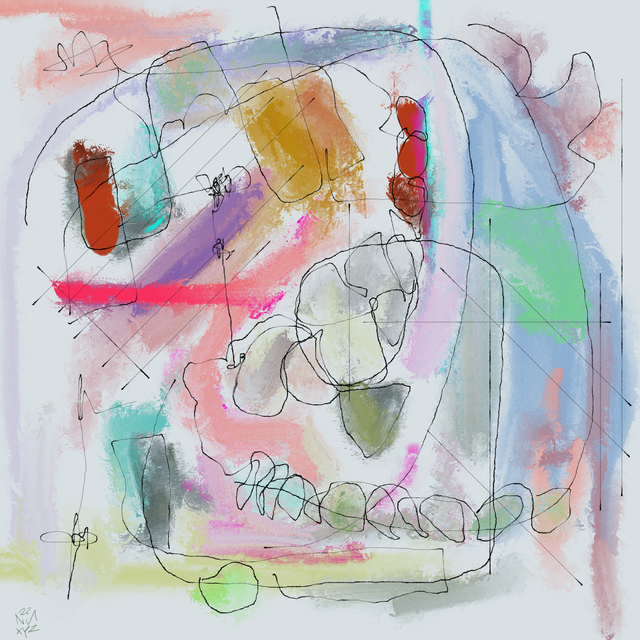
View artworkThin black contours surround lightly colored patches on a pale ground. Smaller loops collect near the lower center. The placement can suggest a face, but the broad enclosing outline and loose interior shapes also remain readable as separate marks.
The scattered interruptions soften into pale color, while one dark line provides a continuous route.
The fine route becomes an enclosing contour around loosely placed interior shapes.
Abstract #40
nnxyz
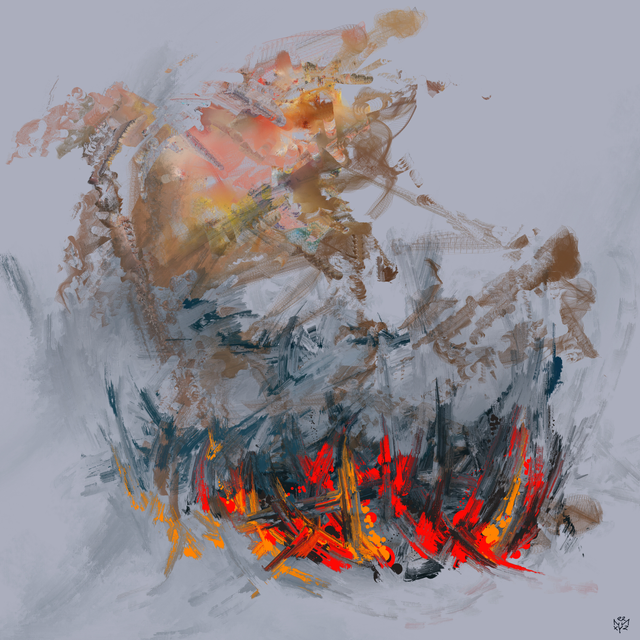
View artworkA loose central formation occupies a gray ground, with pale brown marks above and dark blue-gray strokes below. Bright red accents concentrate near its lower edge. The surrounding open space makes the uneven outline more prominent than the internal divisions.
The thin enclosure gives way to a more substantial central formation surrounded by gray.
Gathering at the center
Long strokes, crossing bands and irregular patches gather into central areas. Compare how each concentration meets its surround, ending where a wide pale field makes dark edges clear.
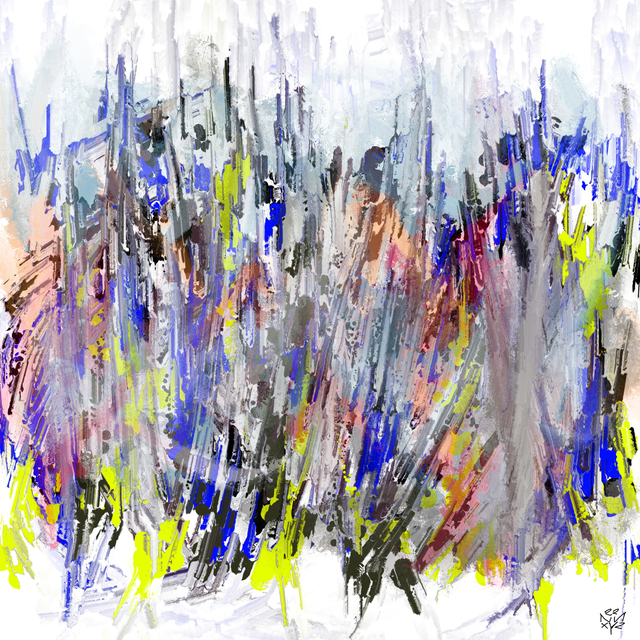
Abstract #41
nnxyz
View artworkLong pale, blue and purple strokes rise through a light field. Yellow accents punctuate the lower and middle areas. The repeated uprights create a broad central concentration, though their uneven lengths leave its edge open.
The compact central formation extends into long pale and blue uprights with an open upper edge.
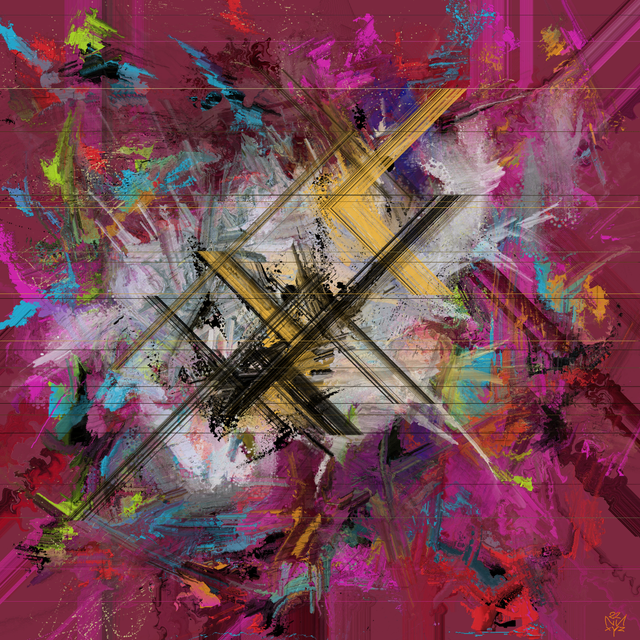
Abstract #42
nnxyz
View artworkDark diagonal bands cross at the center of a magenta field. Pale and yellow strokes travel through the same intersection. The crossing establishes a clear focal area, while scattered surrounding marks keep that area from becoming a closed shape.
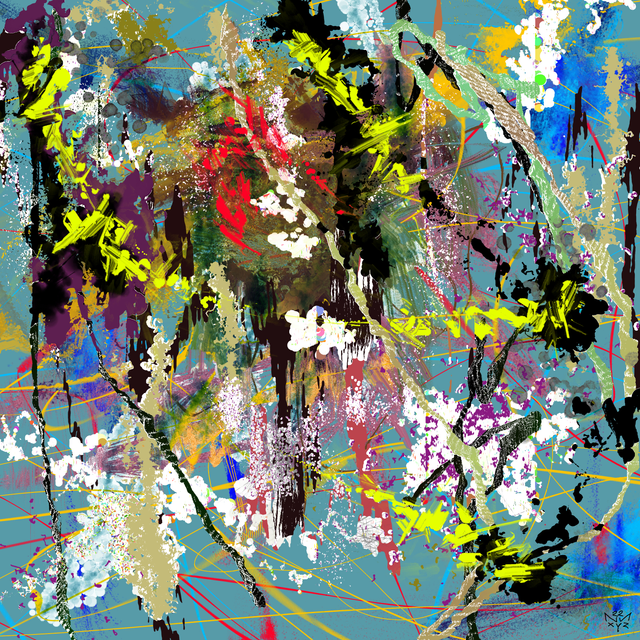
Abstract #43
nnxyz
View artworkBlack, white and yellow irregular marks accumulate over blue, green and muted red areas. Thin lines weave between the larger patches. The pale interruptions break up the dense center and make several small openings visible within it.
The uprights give way to diagonal bands that concentrate attention at one central crossing.
The central crossing breaks into irregular black, white and yellow patches with small openings between them.
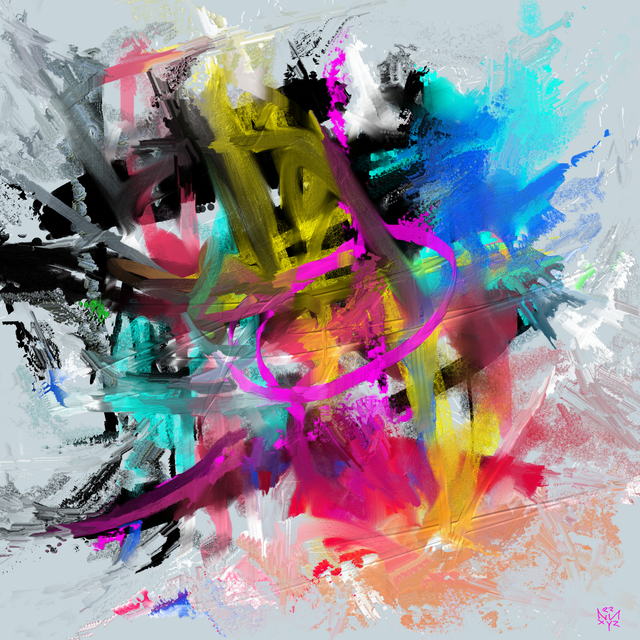
Abstract #47
nnxyz
View artworkBroad black, turquoise, yellow and magenta strokes gather in a central formation on a pale blue-gray ground. Pink loops cross the lower center. The loose outer edges let parts of the formation extend into the surrounding space.
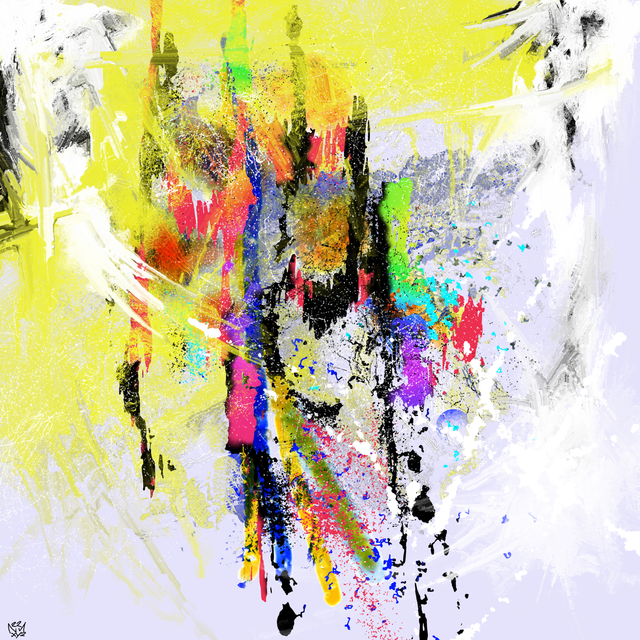
Abstract #50
nnxyz
View artworkDark uprights and bright blue, pink and orange fragments gather within a yellow and white surround. Pale broken strokes cut across the central concentration. The wide light areas make the irregular dark edges especially easy to follow.
The scattered patches gather into broader central strokes crossed by pink loops.
The broad colored strokes narrow into darker uprights within a larger yellow and white surround.
One more look
Return to a dense surface and an open one. Where did you notice individual marks first, and where did you begin with the edge of the whole formation?