Heads Emerging from Darkness
Which marks let a face become visible against a dark ground?
Look for the marks that make a head distinguishable from dark surroundings. Contours, colored bands, crossed shapes and teeth offer different points of entry. Follow them across more layered or less clearly bounded surfaces. Compare what first draws your attention with the quieter shapes you locate after spending more time with the image.
Outline Holds the Face
Three works where a strong outer contour is the primary reason a face or figure stays readable against its dark surround — and where that contour begins to stretch or break.
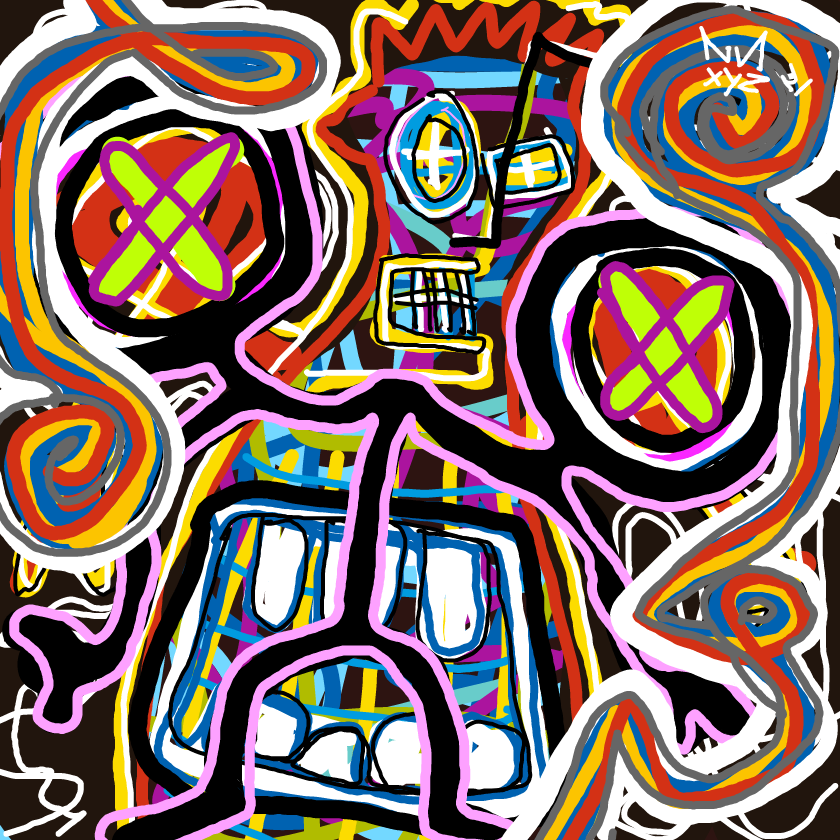
NNOTB #7
nnxyz
View & watch drawingA thick pink outline traces the central figure against deep brown-black; without it, the dense interior marks would dissolve into the ground.
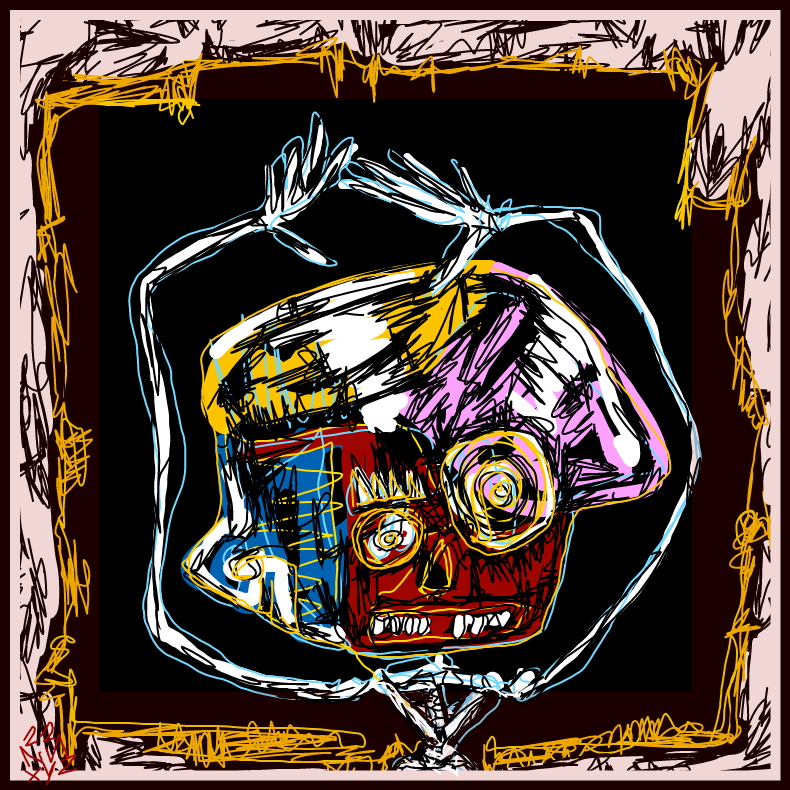
NNOTB #110
nnxyz
View & watch drawingA loose white outline performs the same anchoring work, but here it frays upward into splayed lines, testing how far an outline can stretch before it stops containing.
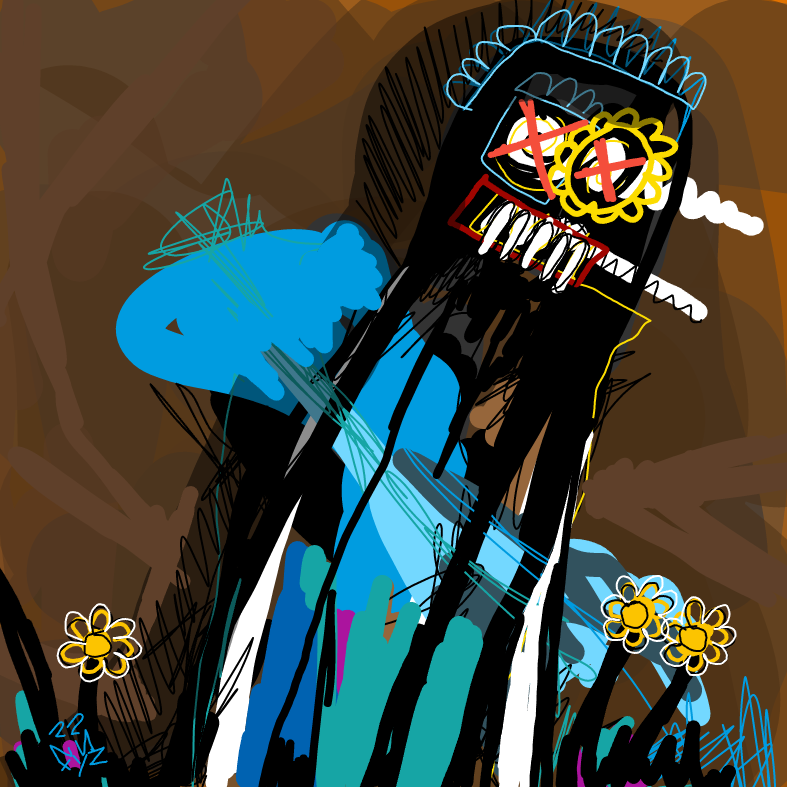
NNOTB #225
nnxyz
View & watch drawingThe figure's yellow-outlined body is solid and readable; the face, replaced by a flat black rectangle, shows what happens when outline encloses nothing but more darkness.
Both works use a single enclosing line against darkness, but where the pink contour in the first is firm and closed, this white outline opens and unravels at the top.
The white outline above frays but still suggests a face; here the outline is intact yet the face it encloses is a void, reversing the problem entirely.
Color Bands Cut Across
Four works where a horizontal bar or broad color zone slices through the face, becoming the single mark that most clearly locates a head within the dark field.
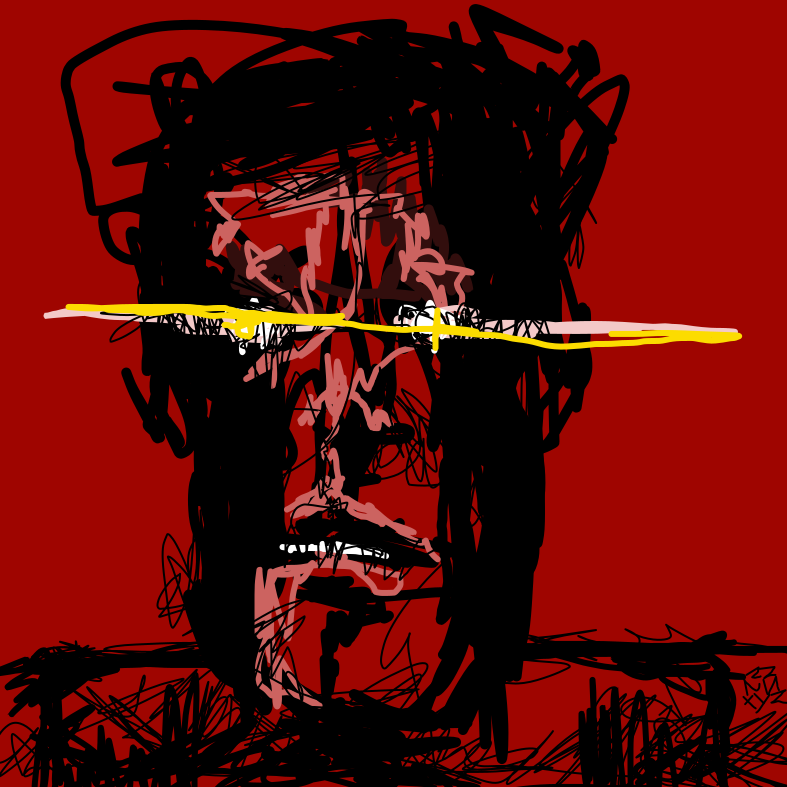
NNOTB #234
nnxyz
View & watch drawingA single yellow-gold band cuts edge to edge across the eye zone; in a field of red-on-red, it is the one mark that unambiguously locates the face.
The previous outline defines a body but leaves the face dark; here a single horizontal stroke does the opposite, marking the face while the rest merges with its red ground.
NNOTB #285
nnxyz
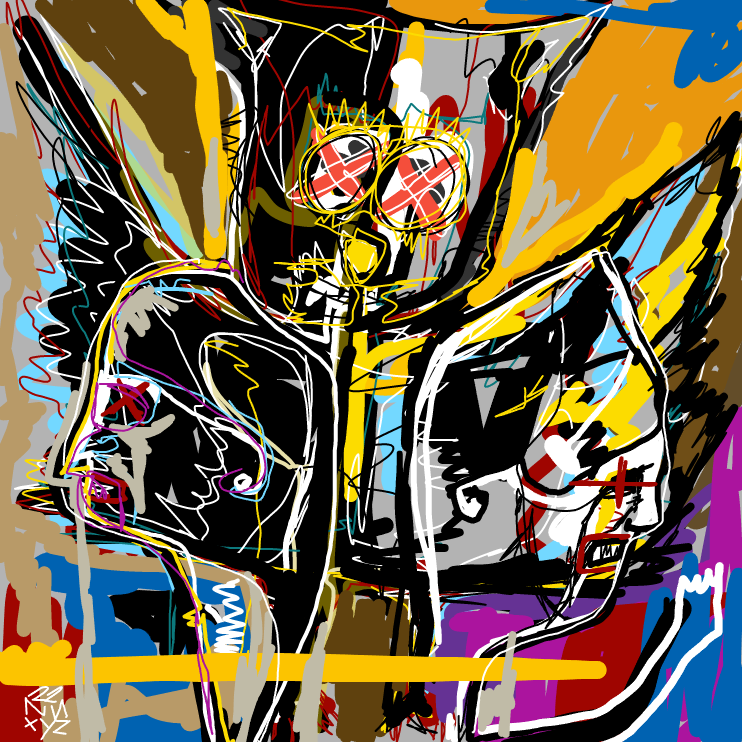
View & watch drawingYellow-gold sweeps bracket the figure above and below; the paired red cross-hatched circles read as eyes only because those bands frame the dark mass between them.
NNOTB #290
nnxyz
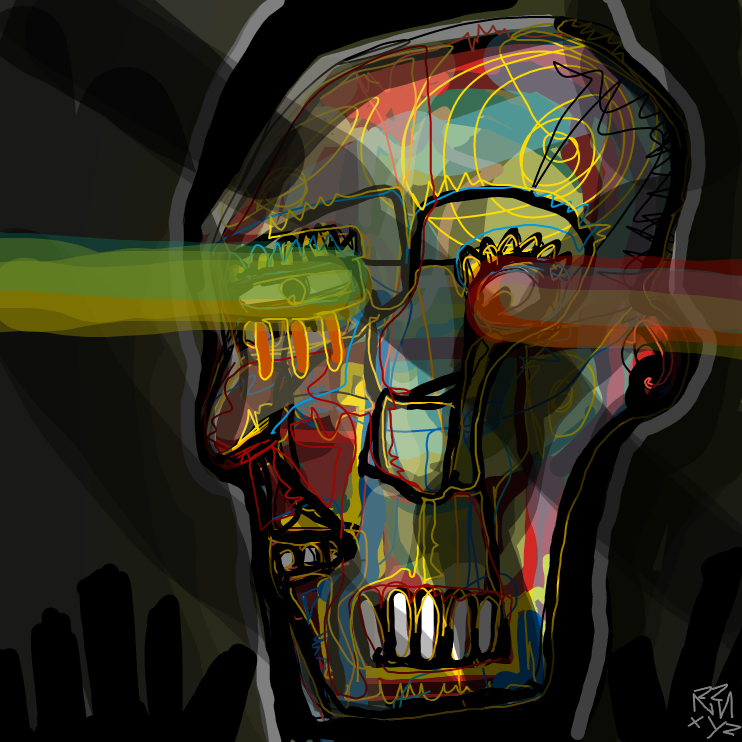
View & watch drawingA broad green band and a yellow band slice through the skull mid-face, indifferent to the anatomy beneath, yet their crossing makes the skull's interior suddenly legible.
In the previous work one band crosses the face; here bands sit above and below the figure, so the dark mass between them acquires a face-like reading by position alone.
The previous bands frame a dark mass from outside; here the bands cut directly through a skull form, intersecting its structure rather than surrounding it.
NNOTB #93
nnxyz
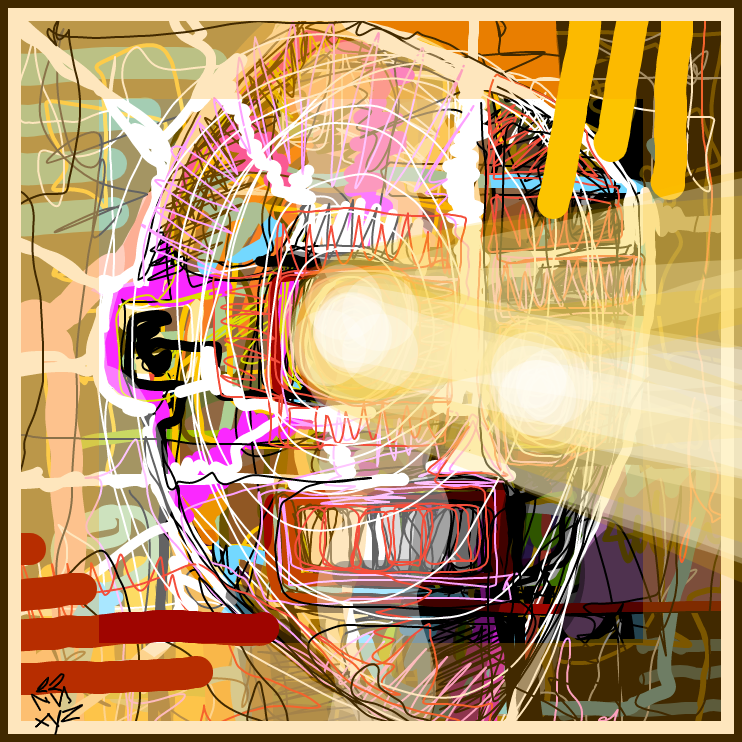
View & watch drawingA blazing central bloom of light organizes the layered circular marks into a recognizable head; that glow functions as the band, the one element that holds the form together.
The previous bands are opaque and slice through; here the organizing mark is light itself, radiating outward from the center rather than imposed across it.
Crossed Marks and Mismatched Eyes
Four works where X-marks, asymmetric eyes, or a split-face division are the visible device that gives each face its distinct character against the surrounding dark.
NNOTB #69
nnxyz
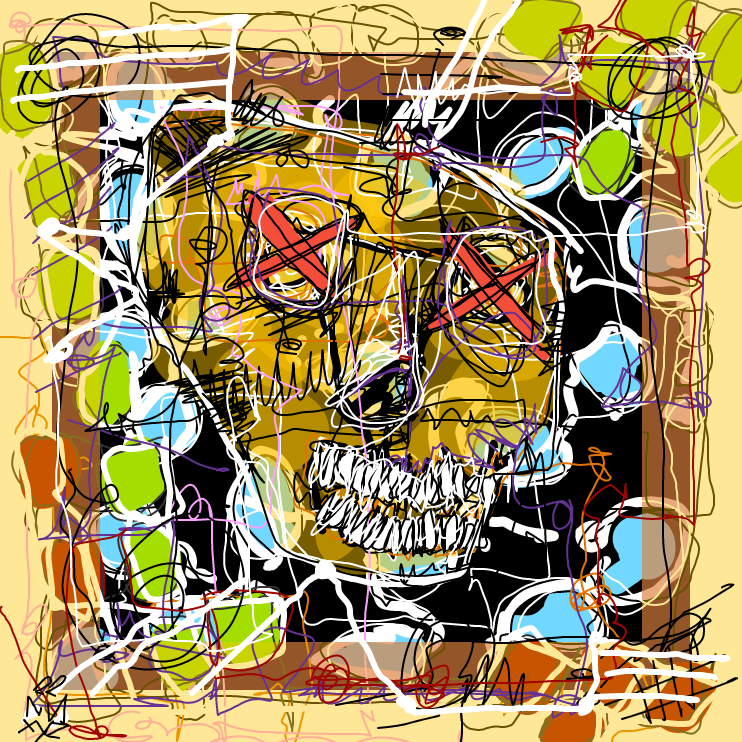
View & watch drawingTwo red X marks over the eye sockets are the sharpest contrast against the gold skull; they simultaneously locate the eyes and block them.
The previous work's central glow radiates outward from the eye zone; here red X marks occupy the same zone and close it off, swapping emission for cancellation.
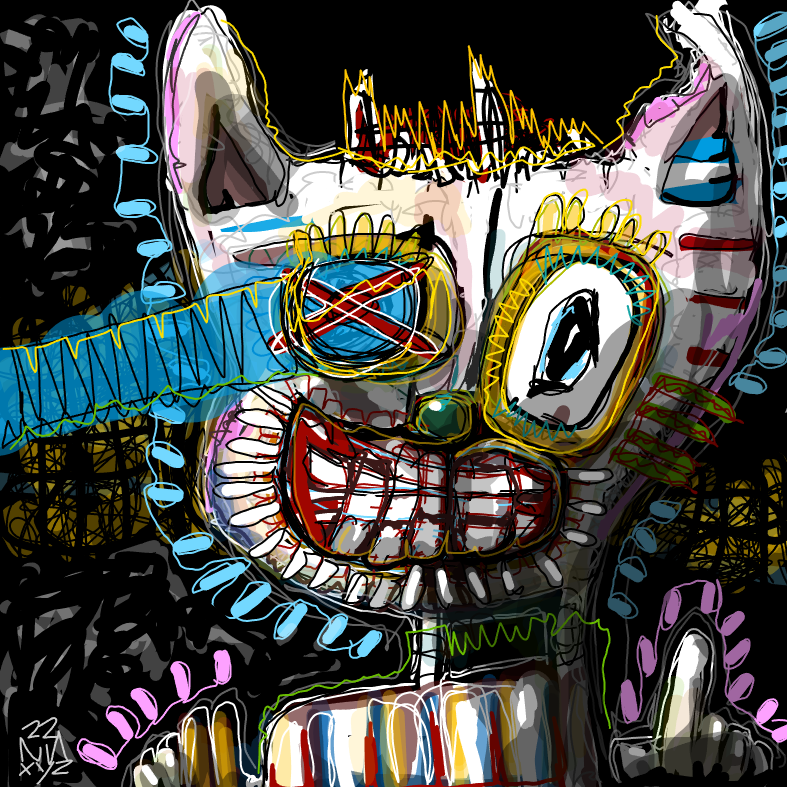
NNOTB #252
nnxyz
View & watch drawingOne eye carries a red X-crossed circle, the other a blue iris and dark pupil; the asymmetry between sealed and open makes the face feel off-balance in a way identical marks could not.
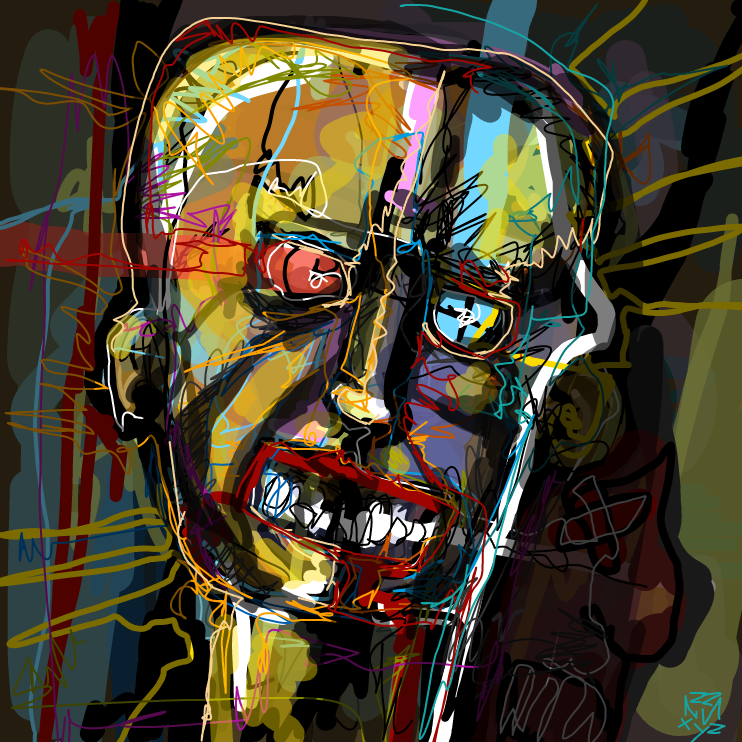
NNOTB #283
nnxyz
View & watch drawingA dark vertical line divides the face: warm amber-red on one side, cool blue-grey on the other; the split is the primary mark that makes the face visible as a face.
The previous work's two X marks treat both eyes identically; here the treatment splits—one eye crossed, one open—so the face holds two different states at once.
The asymmetry above is between two eye treatments; here the whole face is divided by a single vertical line, extending the split from one feature to the entire surface.
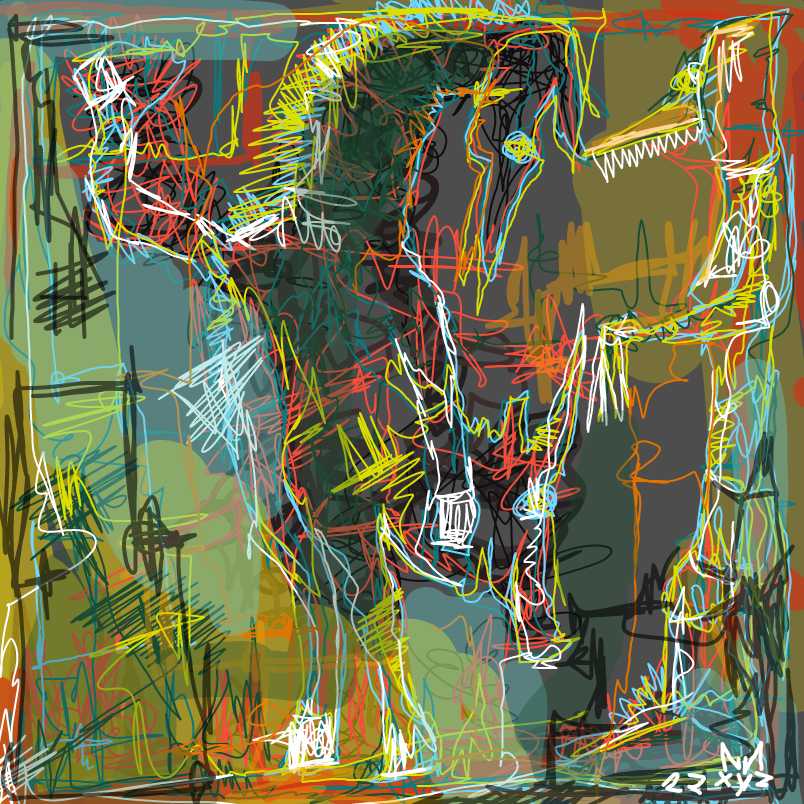
NNOTB #23
nnxyz
View & watch drawingThe dark-green mass would be nearly formless without the two small ringed circles near the upper center; those circles are the only marks that propose a face inside the dense crossing lines.
The previous face is split but fully present; here a face is barely proposed—two ringed circles in a dense field are the only evidence a head is there at all.
Enclosing Forms
Three works where the face sits inside a curved or hooded boundary, raising the question of how much of the face that enclosure actually brings forward versus conceals.
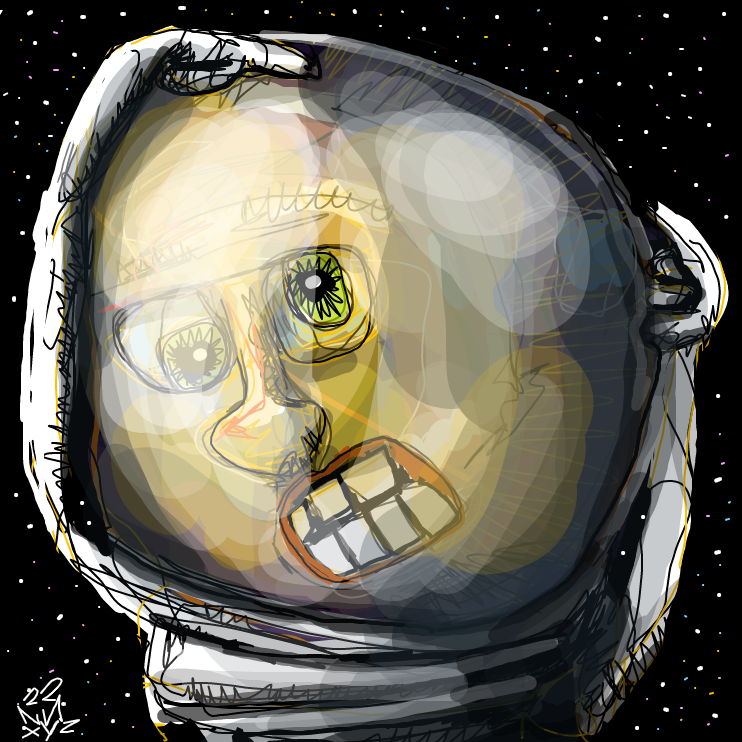
NNOTB #104
nnxyz
View & watch drawingThe rounded helmet-visor form encloses two asymmetric eyes and a gridded mouth; pale washes and a bright highlight suggest a reflective surface that shows a face without fully exposing it.
The previous face is barely legible inside dense marks; here a rounded enclosure with a bright highlight offers more structure, yet the face inside remains incomplete and asymmetric.
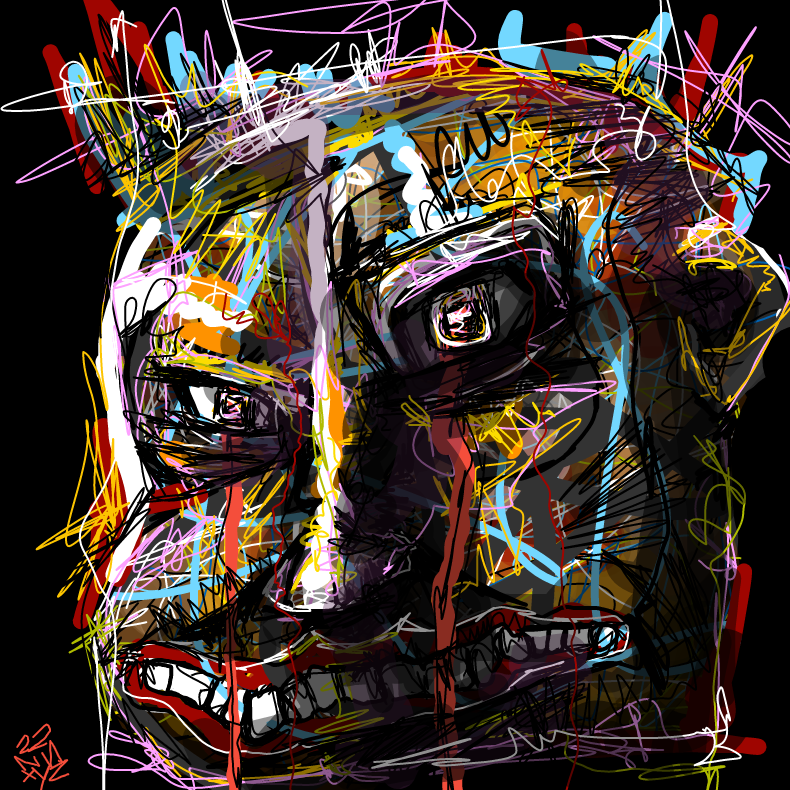
NNOTB #134
nnxyz
View & watch drawingA large face fills the frame but colored loops spill past the jaw into the black surround, so the enclosure the head should provide keeps leaking outward.
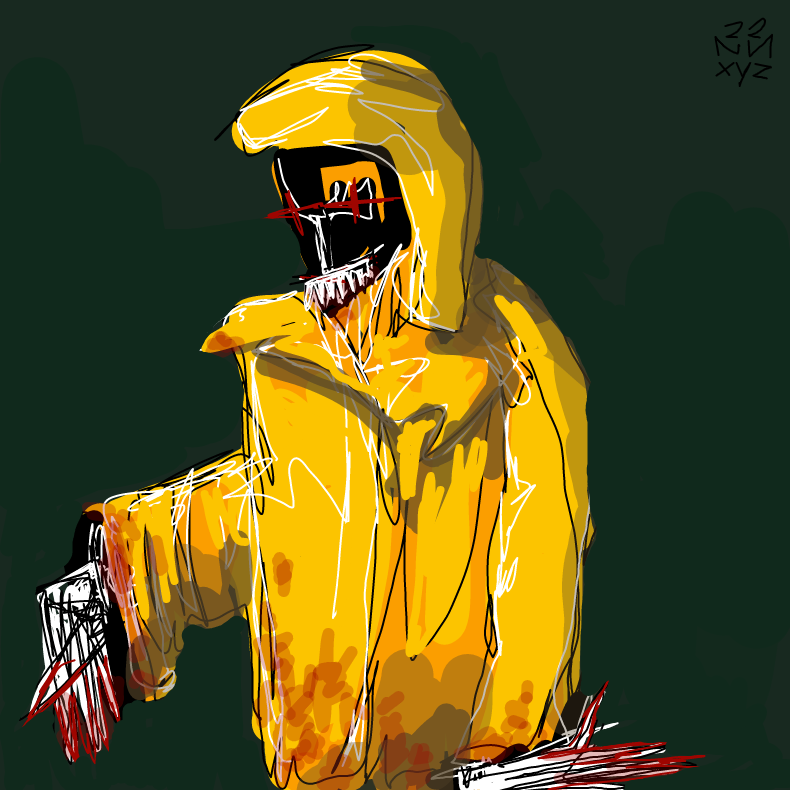
NNOTB #38
nnxyz
View & watch drawingThe yellow hood is the most solid enclosure in the gallery, yet the face inside it is the darkest void—red slashes and bared teeth are all that remain where a face should be.
The helmet above holds its contents; here the face has no such shell, and its marks overflow into the surrounding dark, dissolving the boundary the helmet maintained.
The previous face leaks outward into darkness; here the enclosure is intact and opaque, but the darkness is now inside, behind the hood.
When the Ground Wins
One work in which the dark field or a competing surround overwhelms the face, leaving marks that suggest a head is present without fully delivering one — or abandoning the face altogether.
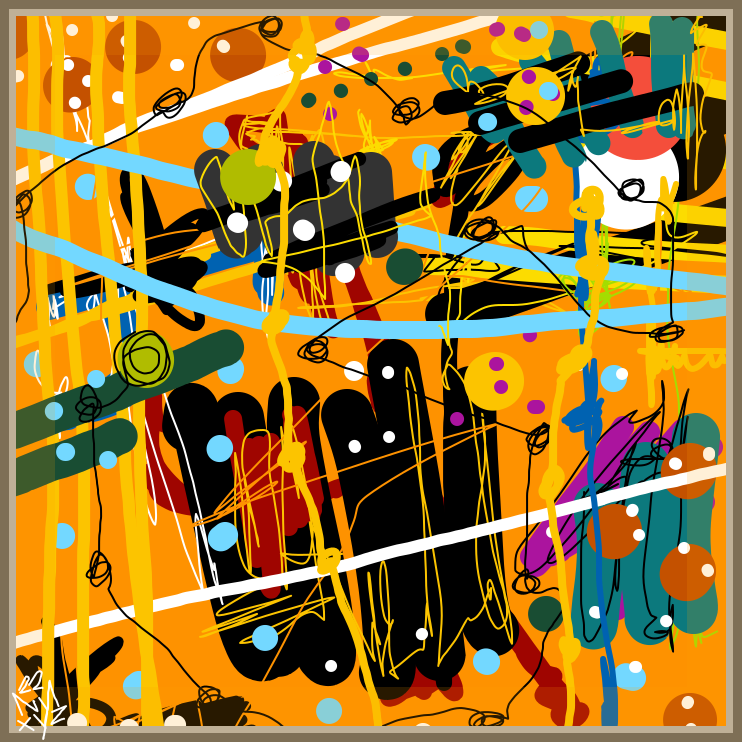
NNOTB #127
nnxyz
View & watch drawingAn amber ground, crossing blue bands, and scattered black masses offer no stable face; the looping lines and dots read as noise rather than features, the gallery's most dissolved image.
The previous hood contains darkness within a legible figure; here figure dissolves entirely—the amber field and black masses offer no face to locate.
One more look
Return to a darker work and begin with a small accent. Which features become easier to find when you follow that mark?