Figures in Company
When do separate figures begin to form a group?
Look first at the spaces between figures, then at the marks they share. Pairs and groups can remain separate, overlap or become difficult to distinguish from a common pattern. Follow changes in scale, placement and contour through these drawings. Compare a group whose members are readily distinguishable with one whose outlines cross.
Two in a Field
Six works open with pairs separated by open ground. The interval between figures carries as much visual weight as the figures themselves.
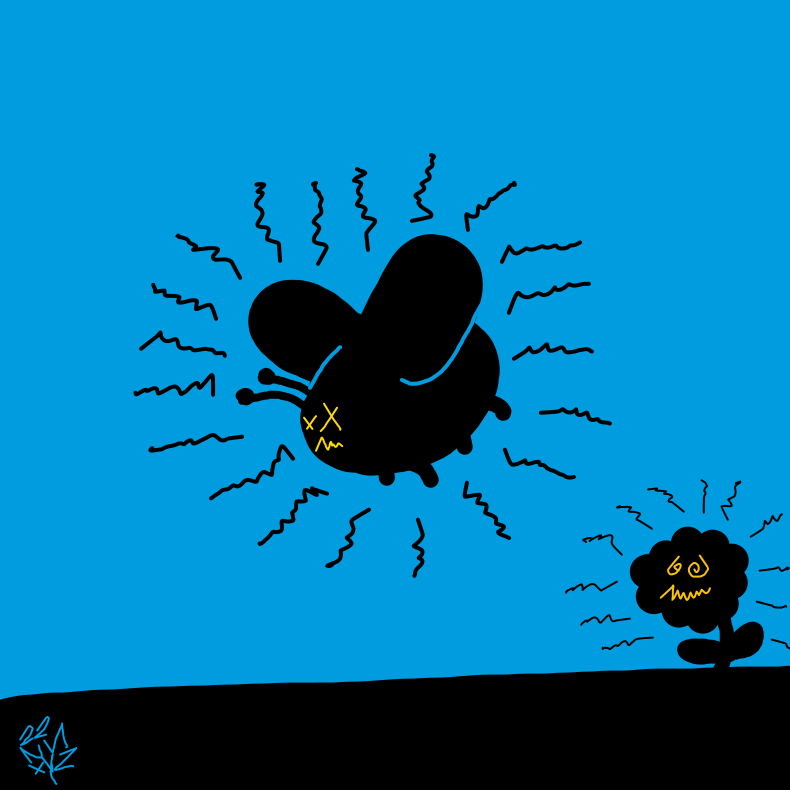
NNOTB #106
nnxyz
View & watch drawingTwo black figures on flat blue share yellow facial marks — X-eyes on the larger, spiral eyes on the smaller — across open, uncluttered space: similarity without contact.
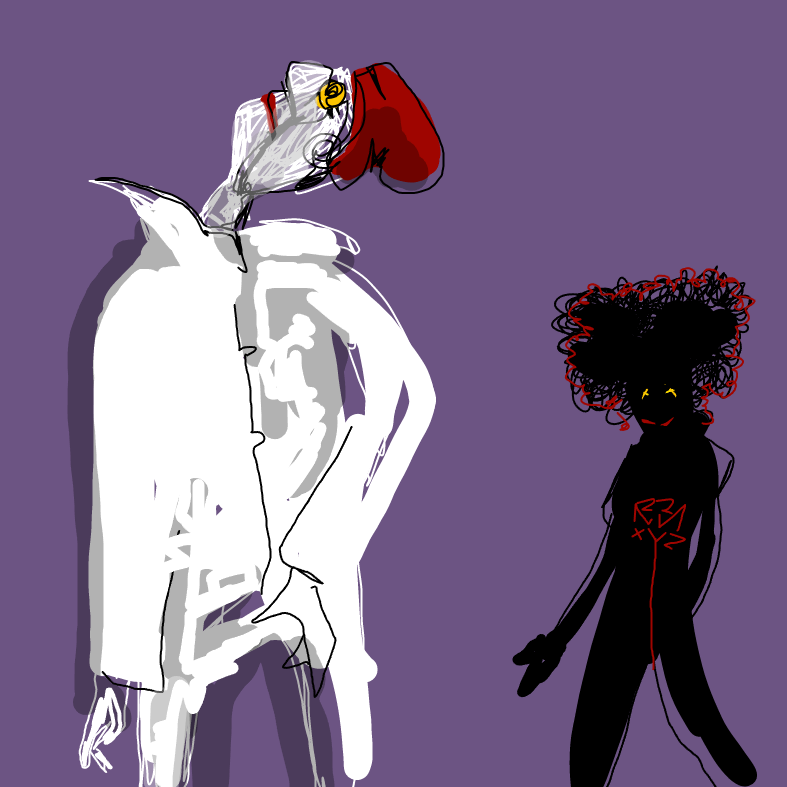
NNOTB #257
nnxyz
View & watch drawingTwo figures on purple also hold apart, but visual weight differs sharply: one open and white, one dense and black, the gap charged by contrast rather than likeness.
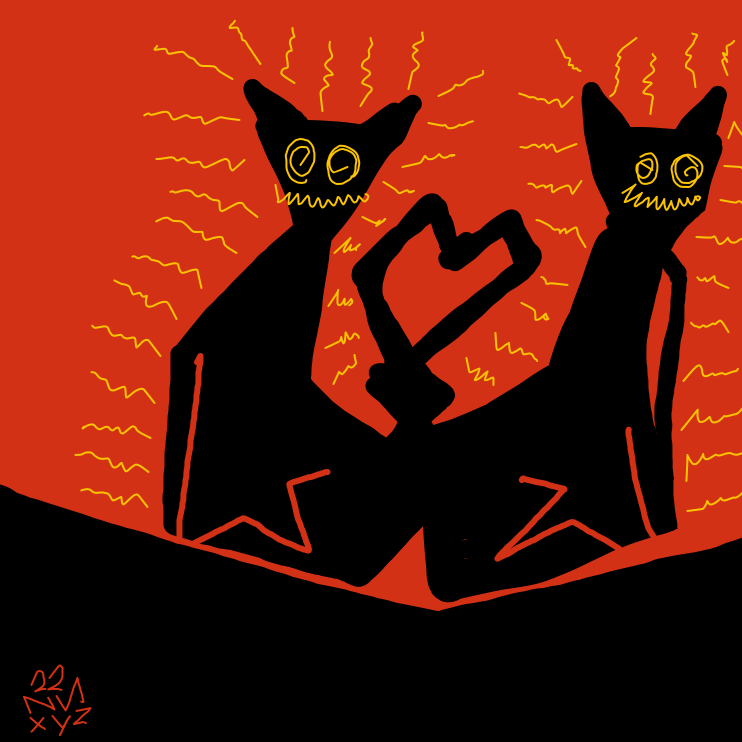
NNOTB #58
nnxyz
View & watch drawingTwo flat black figures on red close the gap just enough to form a heart shape between their raised arms — the first moment of deliberate contact in the gallery.
Both works place exactly two figures on a flat, uncluttered ground with deliberate empty space between them.
Where the purple-ground pair never reaches toward each other, these two meet at center, their arms completing a shared form neither could make alone.
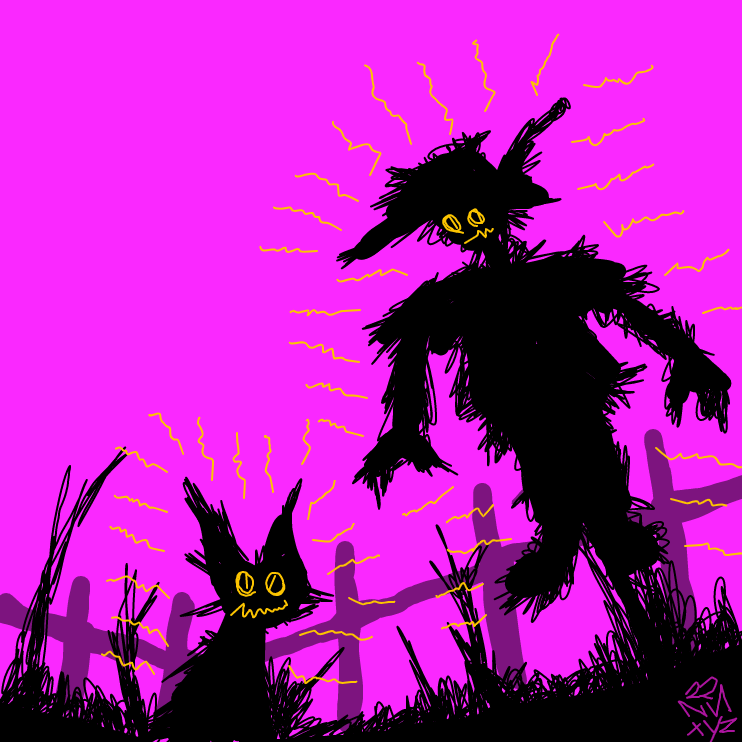
NNOTB #89
nnxyz
View & watch drawingA large and a small figure share a magenta field without touching; yellow zigzags scatter between them, filling the gap with static rather than connection.
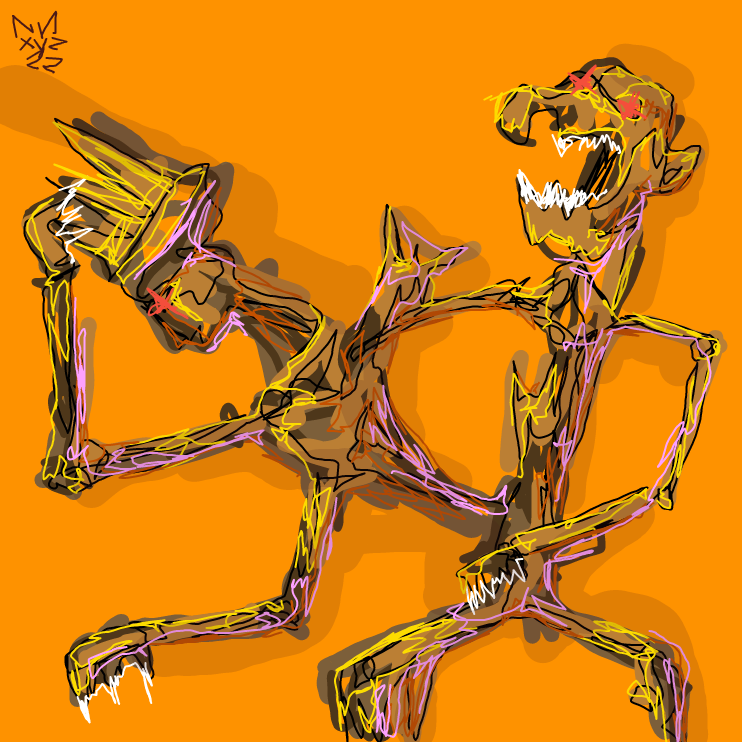
NNOTB #28
nnxyz
View & watch drawingTwo gaunt jointed figures share an unbroken orange field; one raises a cone toward its own head, the other crouches low — parallel actions that do not address each other.
The heart shape of the previous work gave contact a clear sign; here the space between figures is filled with marks that suggest charge without resolving into gesture.
Both works use a flat single-color ground with no depth cues, so the figures' relationship depends entirely on posture and proximity rather than setting.
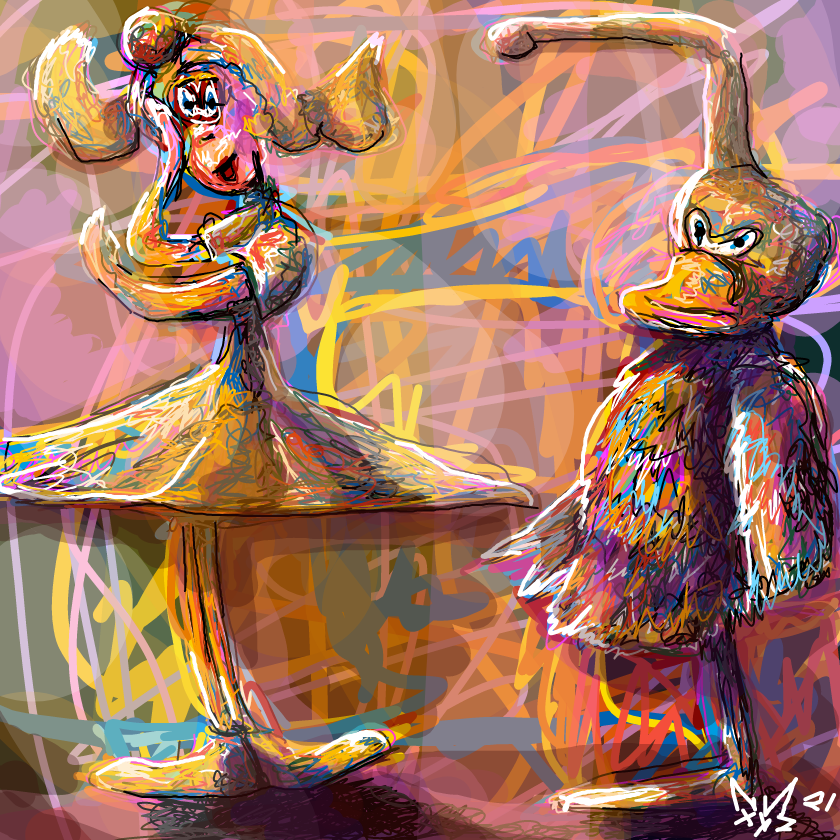
NNOTB #9
nnxyz
View & watch drawingOne expansive open-mouthed figure faces a compact scowling bird-like figure across an open middle ground — the most explicit face-to-face orientation so far.
The orange-field pair acted in parallel without facing each other; here the two figures are oriented directly toward one another, and the background carries loose marks rather than remaining flat, adding pressure to the gap between them.
Marks Held in Common
Five works explore figures that share repeated visual marks — crossed eyes, spiked crowns, coiled lines — as if the marks themselves are what connects them.
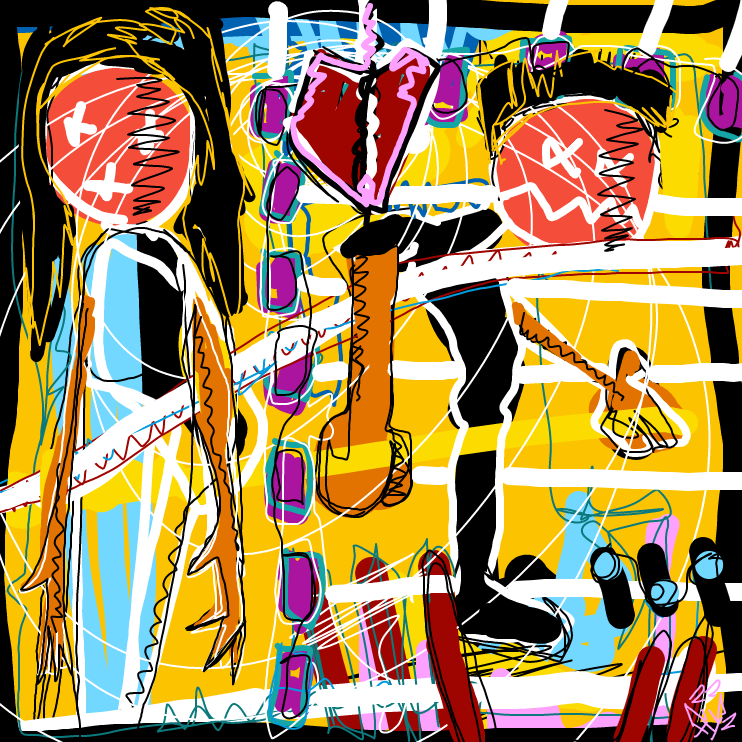
NNOTB #136
nnxyz
View & watch drawingTwo figures carry nearly identical red-circled cross-marked heads against a yellow field; the doubling reads as a bond written directly onto each face.
The previous chapter's pairs were linked by posture and proximity; here the connection is inscribed in matching marks on each figure's head.
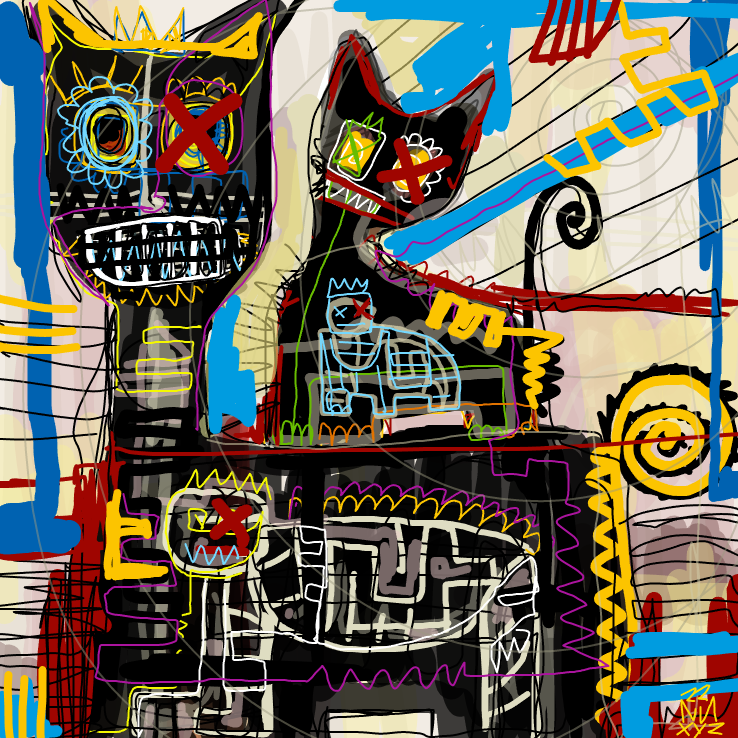
NNOTB #249
nnxyz
View & watch drawingTwo large black figures share crossed X-eyes, ringed circles, and tooth rows; the repeated marks stack and overlap until the figures feel like one dense system.
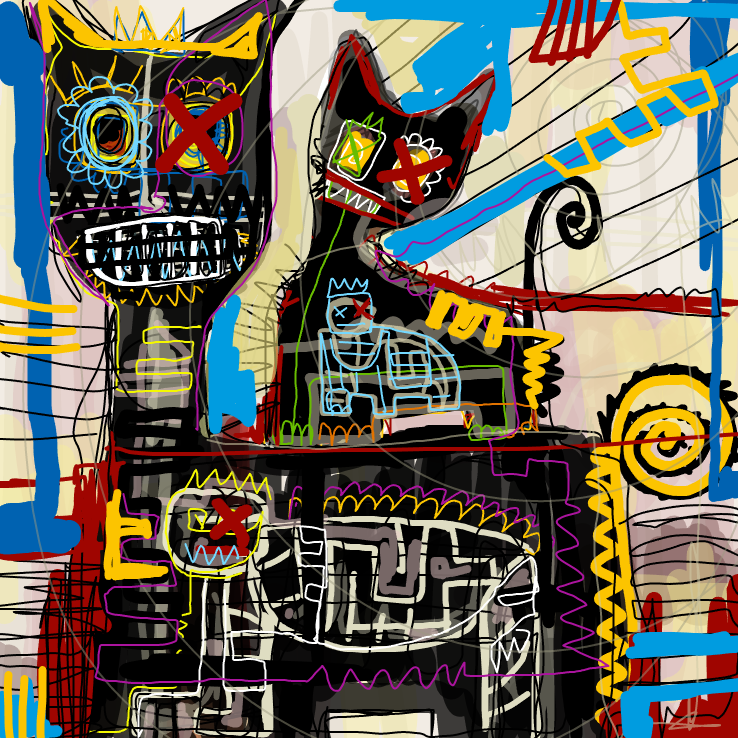
NNOTB #249
nnxyz
View & watch drawingTwo black animal-like figures carry the same red X-eyes and yellow outlines as the previous work, but a buzzing lower zone of interlocking rectangles adds a shared environment to the shared marks.
Both works use identical head-marks to link their figures, but here the figures press closer together, their shared marks beginning to merge rather than simply echo.
The previous work's figures were linked by marks alone; this one surrounds both figures with a common visual field, so mark and setting together form the bond.
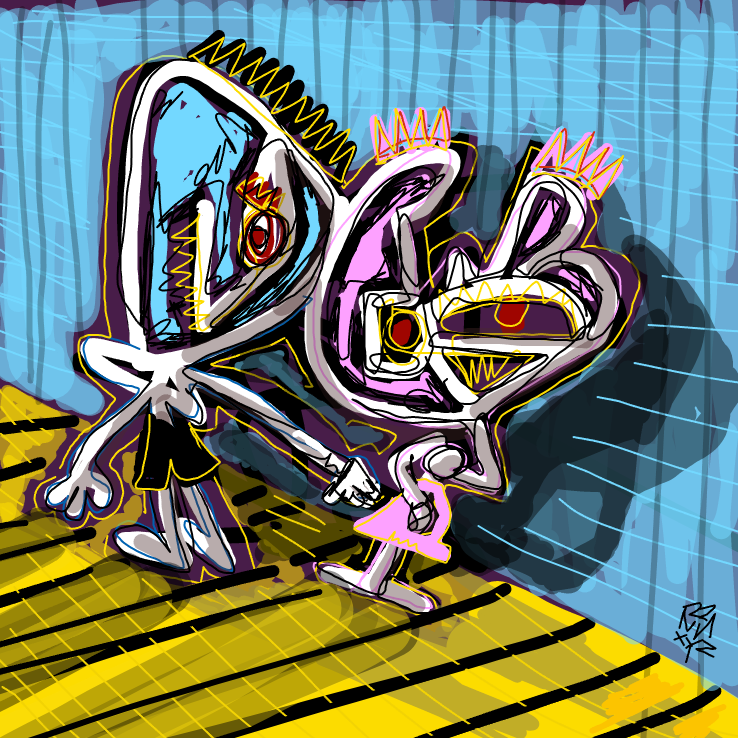
NNOTB #261
nnxyz
View & watch drawingTwo crowned figures with matching red eyes and splayed hands lean toward each other; the shared crown marks and the striped floor beneath them suggest a theatrical pairing.
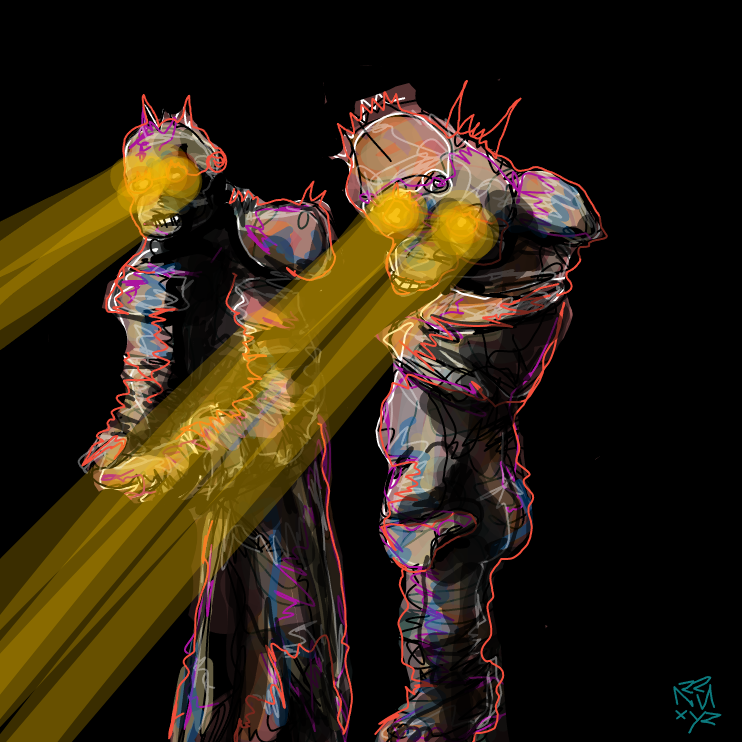
NNOTB #272
nnxyz
View & watch drawingTwo spiked figures hold each other inside near-black space, their matching disc-eyes and red-loop outlines making the embrace feel like a meeting of similar forms.
Where the previous pair faced outward with crossed-out eyes, these two face each other, their matching crowns framing the space between them as a kind of stage.
The crowned pair leaned toward each other without touching; here the figures make full contact, the shared marks now wrapped inside an actual embrace.
Three and the Space Between Them
Five works introduce a third figure, testing whether the addition produces a group or a more complicated arrangement of pairs.
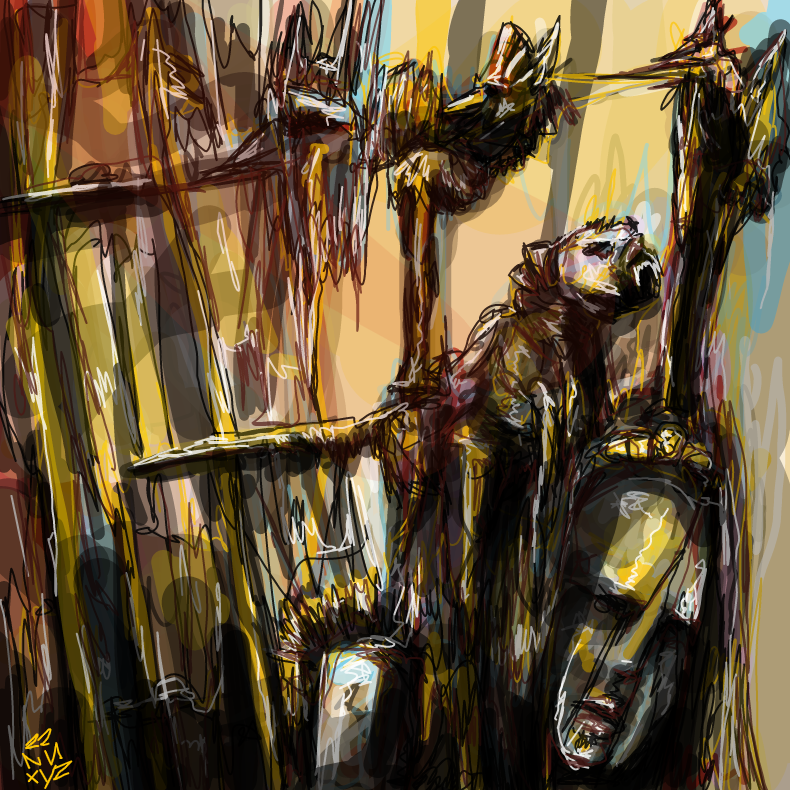
NNOTB #139
nnxyz
View & watch drawingTwo faces share one compressed space without a shared sightline — one thrown back, one tipped forward — held inside vertical strokes that neither frame nor release them.
The previous chapter ended with two figures in contact; here two faces occupy the same zone yet look in opposite directions, reopening the question of whether proximity equals connection.
NNOTB #297
nnxyz
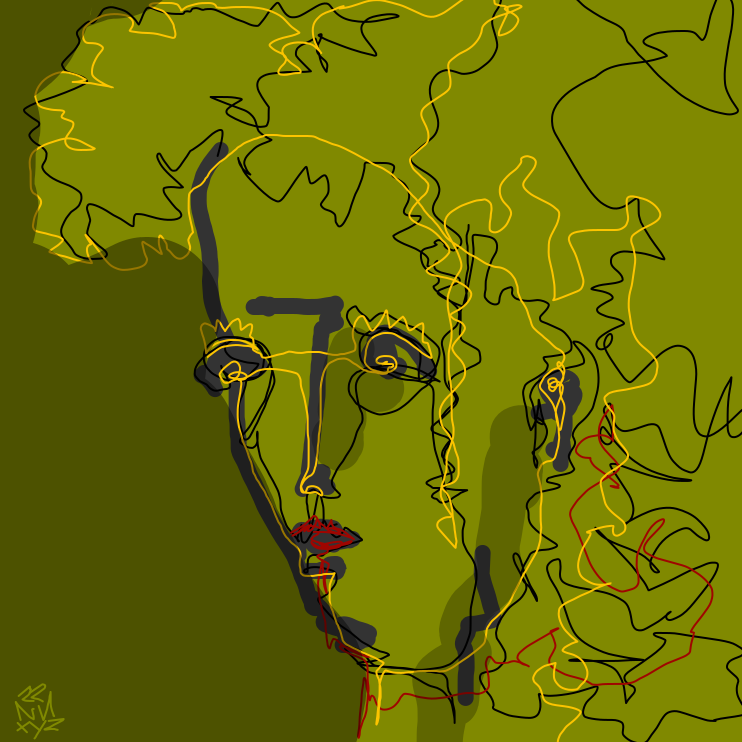
View & watch drawingThree face-like forms share one olive field, the largest anchored by thick gray lines while two smaller versions drift rightward and grow fainter — multiplicity without clear separation.
NNOTB #233
nnxyz
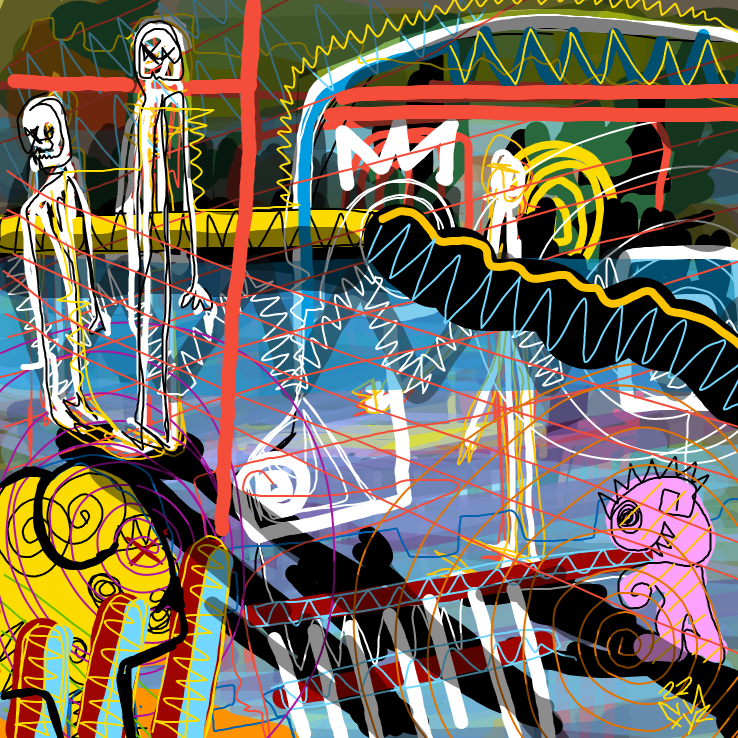
View & watch drawingTwo skeletal figures at left and a dense coiling mass at right compete for attention; a small pink figure in the corner sits apart, belonging to neither zone.
The two-face compression of the previous work becomes three here, the additional forms drifting rather than pressing, suggesting repetition more than grouping.
Where the olive-field faces shared a single surface, this work splits into competing zones, the small corner figure raising the question of whether a figure outside the main grouping still belongs to it.
NNOTB #197
nnxyz
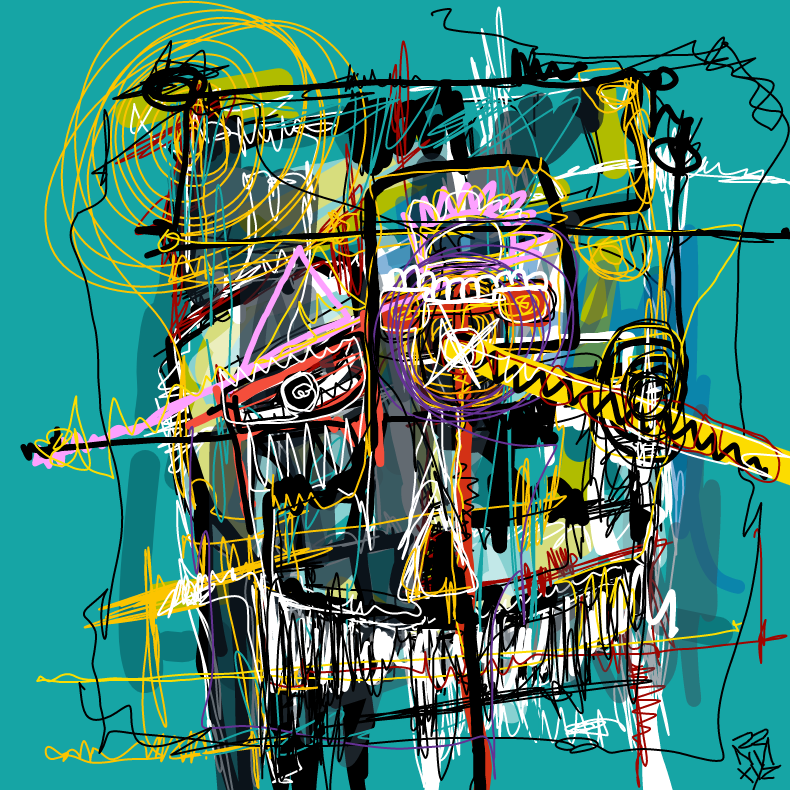
View & watch drawingTwo broad dark forms stand side by side while a smaller, quieter third form sits apart to the right — the clearest spatial diagram of majority and outlier in the exhibition.
NNOTB #3
nnxyz
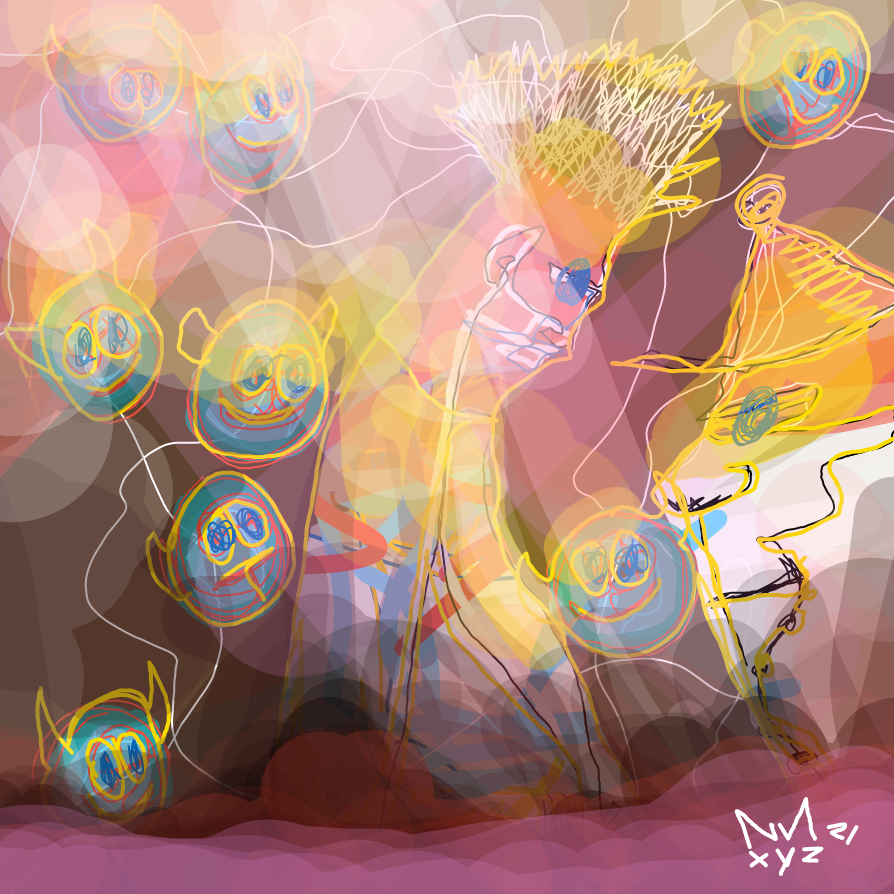
View & watch drawingA large warm central figure is surrounded by multiple small circular eye-forms drifting across the left; a wandering white line threads near them without connecting them to the center.
Both works place a smaller figure at the edge of a larger grouping, but here the teal ground holds all three at a cool, legible distance that makes the separation explicit.
The previous work's three figures were spatially distinct; here the smaller forms multiply and scatter, so the question of grouping becomes one of diffusion rather than arrangement.
Bodies Pressed Together
Three works move from proximity to overlap, where figures share outlines or surfaces and individual boundaries become difficult to trace.
NNOTB #289
nnxyz
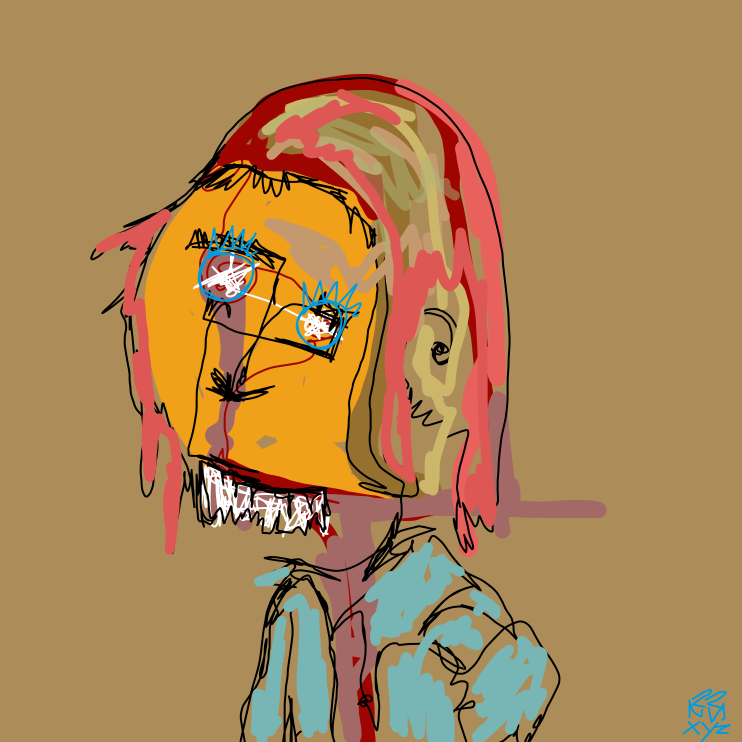
View & watch drawingTwo head shapes occupy the same space without fully merging — one flat orange, one softer and receding — their overlapping edges making separation feel unstable.
The previous chapter's figures were scattered across open ground; here two heads press into the same zone, their edges blurring the boundary between one figure and another.
NNOTB #22
nnxyz
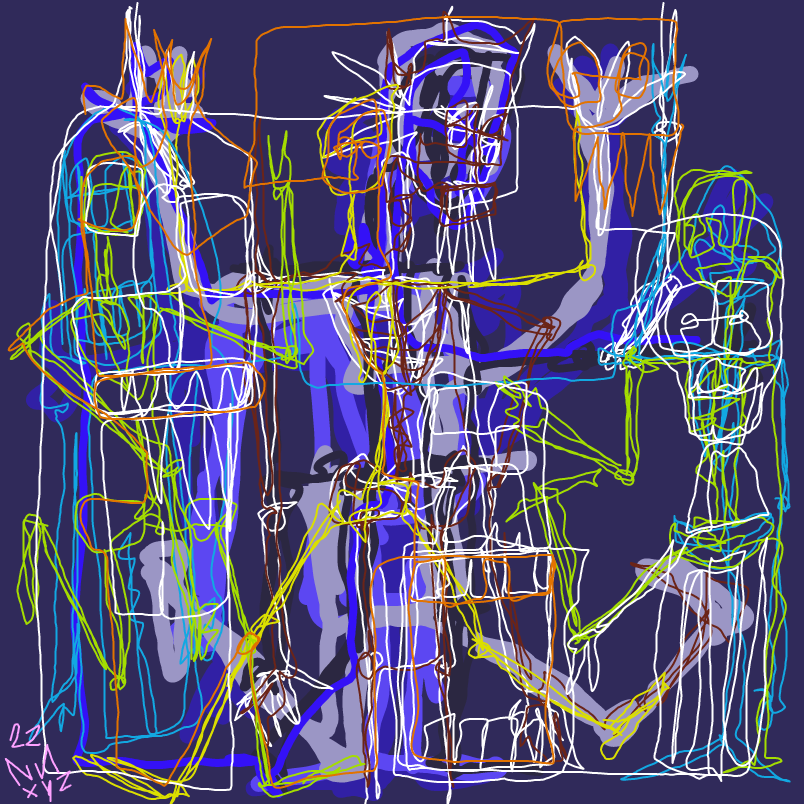
View & watch drawingThree upright forms dissolve into overlapping rectangles in orange, teal, and yellow-green; the white outlines read as bodies, but the stacked geometry makes them hard to count.
NNOTB #6
nnxyz
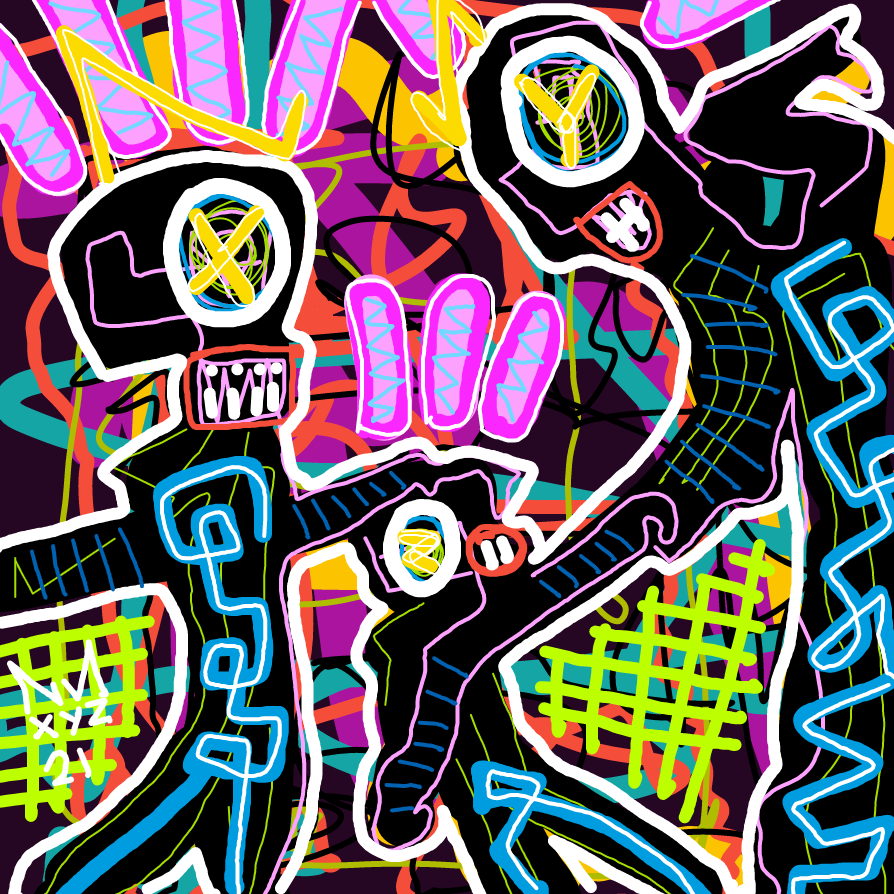
View & watch drawingTwo heavy black forms face each other across a field packed with neon grids and hatched rectangles; the crossed circles inside each read as eyes, giving the dense compression a confrontational axis.
The two-head overlap of the previous work becomes three figures here, their edges further dissolved by geometric layering until individual bodies are difficult to isolate.
The previous work's figures were tangled in overlapping colored strokes; here the compression is architectural — neon grids and hatched bands fill every gap, leaving the two forms no room to separate.
The Group as a Single Thing
Four works close the exhibition with figures so close, so numerous, or so uniformly marked that the group itself becomes the subject rather than any individual within it.
NNOTB #13
nnxyz
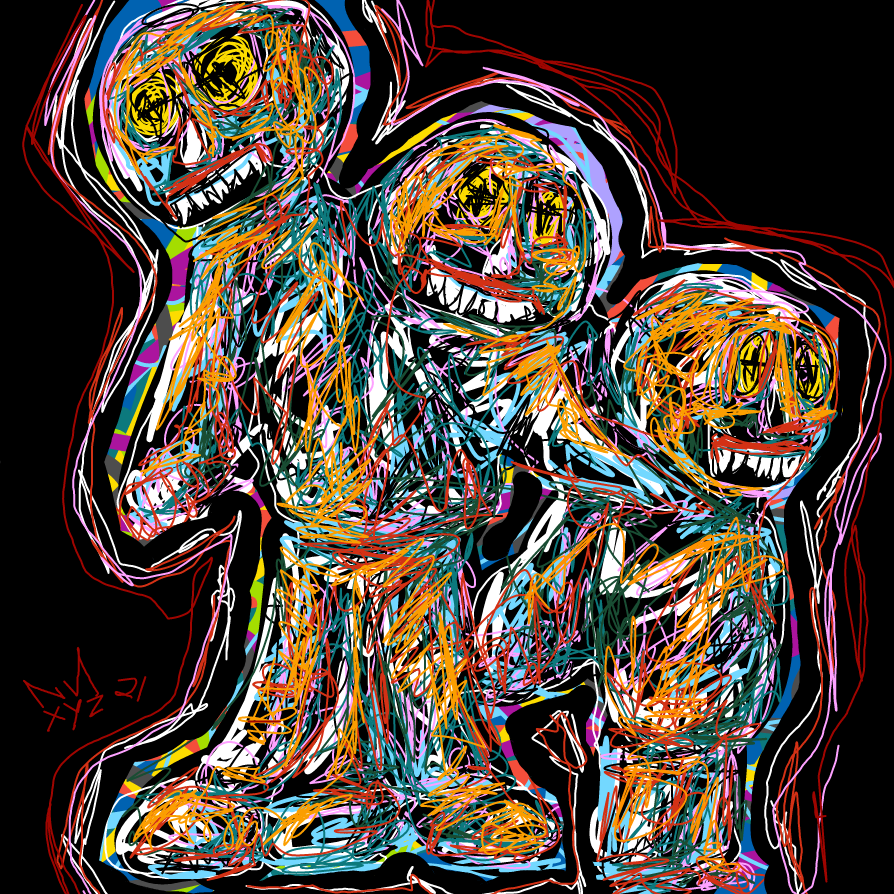
View & watch drawingThree figures press together against black, their crossing orange and teal lines merging at the edges; the shared features and tight grouping make the trio read as one dense entity.
The previous chapter's pairs were compressed by geometry and ground; here three figures share a physical mass, their overlapping lines making the group feel like a single organism.
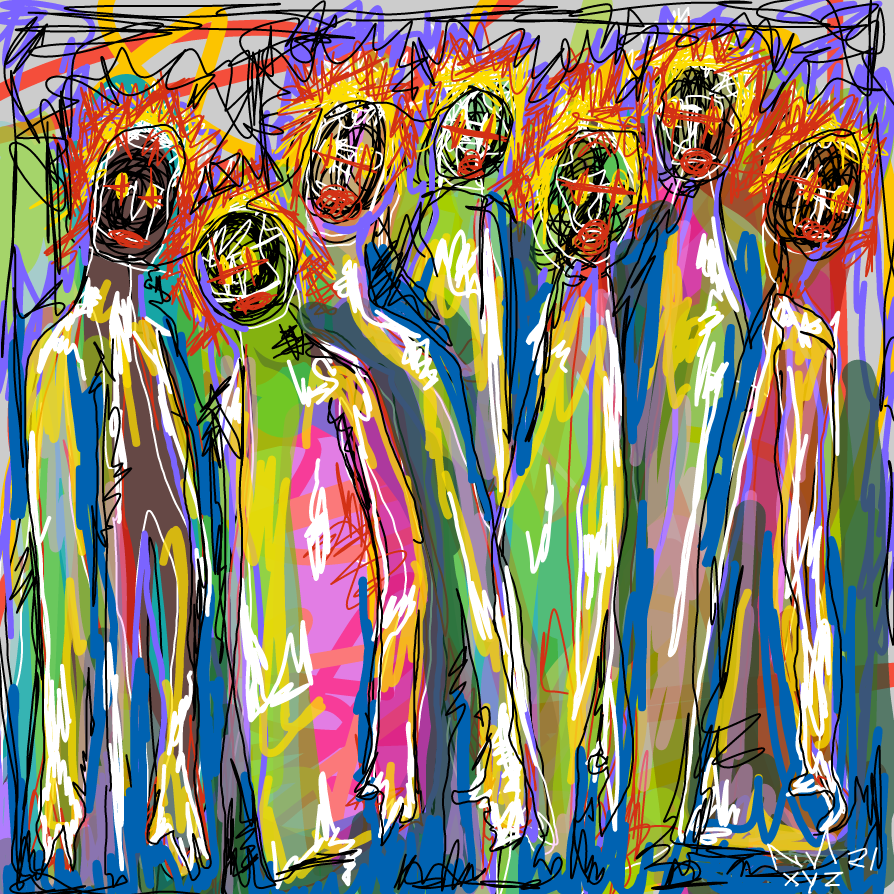
NNOTB #12
nnxyz
View & watch drawingSeven figures stand shoulder to shoulder across the full width, their scribbled heads blazing orange-yellow; the row reads as a collective charge rather than a set of individuals.
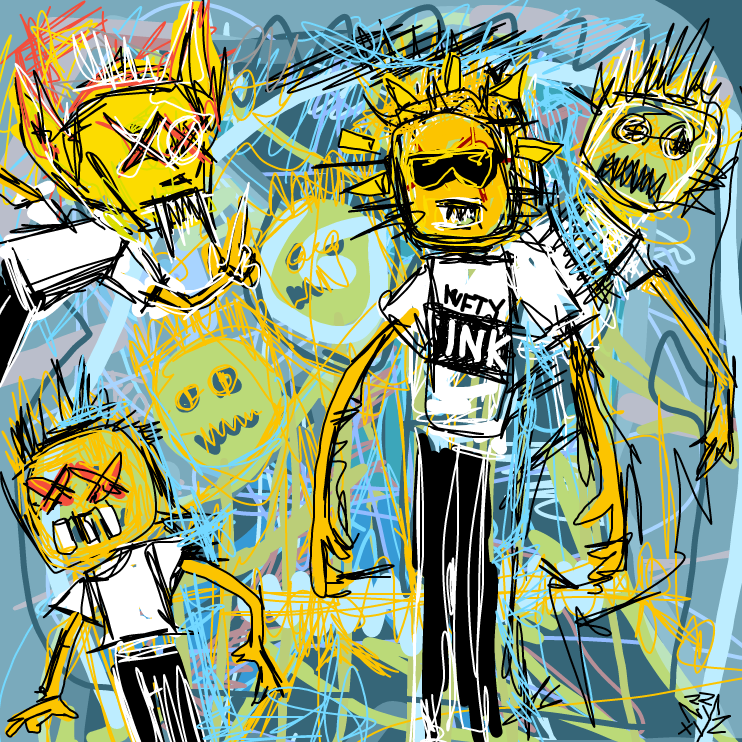
NNOTB #117
nnxyz
View & watch drawingFour spiked figures of different sizes crowd the space, linked by blue scribble lines that weave through all of them — shared atmosphere rather than shared outline.
Three figures formed a tight cluster in the previous work; here seven press across the entire width, the group now filling the frame completely.
The seven-figure row was unified by identical posture and a shared color band; here four figures differ in size and position but are woven together by a common field of blue marks.
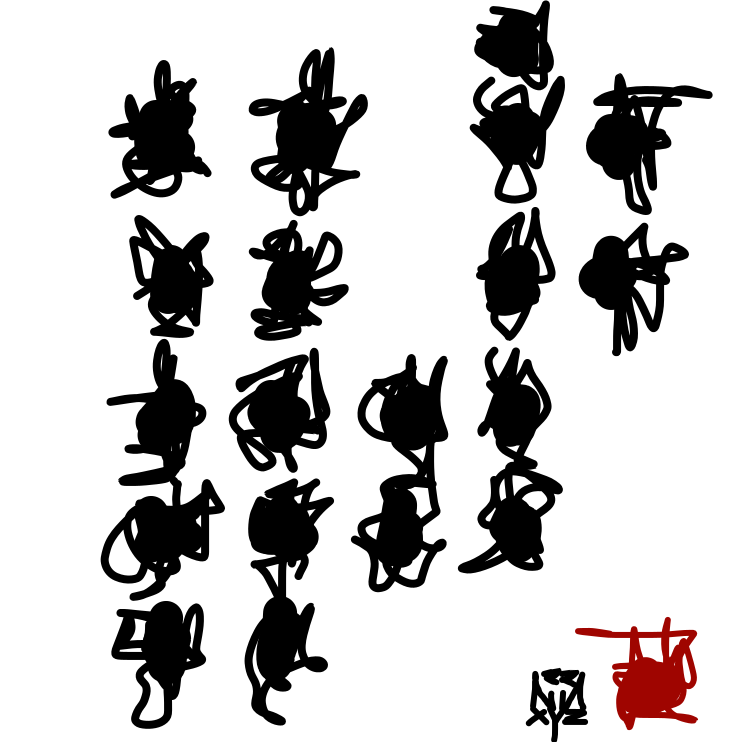
NNOTB #132
nnxyz
View & watch drawingRoughly eighteen small figures scatter across white space, each sharing the same rough vocabulary of round body and pointed ears but tilted in a different direction — the group held together by type rather than proximity or contact.
The previous work's four figures were linked by a shared atmospheric field; here the group is held together only by shared form, with open white space between every member.
One more look
Look back at an earlier pair after the more closely grouped figures. Which gaps, overlaps or repeated shapes make the relationship easier to see?